RIGID PIPE AND HOSE PRODUCTION
Start with the material and finished pipe you need to produce. Review the existing PVC/CPVC, PP/PPR and PE pages, then share your product drawing, dimensions, output requirement and destination country. Material compatibility and the proposed configuration must be confirmed for your project.
What this equipment is used for
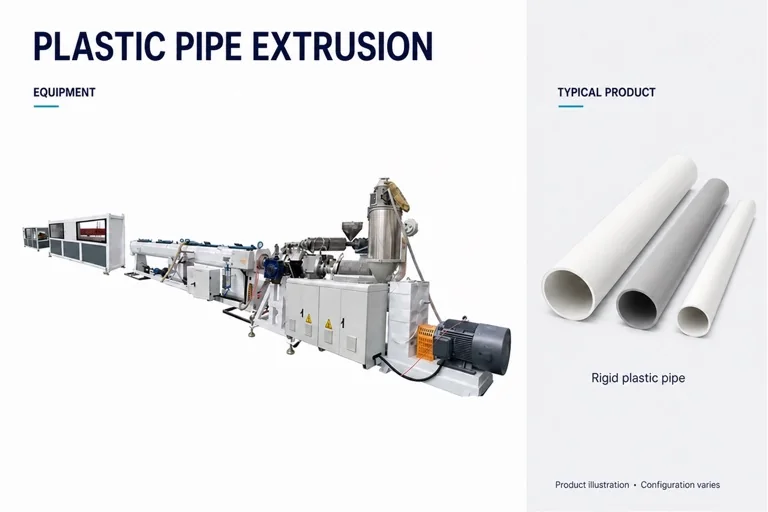
Plastic pipe extrusion equipment can be configured for rigid pipe, flexible hose and compound pipe products. The process route differs for PVC, PE, PP, PPR and reinforced constructions, so the product drawing and material must be reviewed before equipment selection.
Typical equipment scope
- Material feeding, drying or mixing as required by the resin
- Extruder and die tooling selected for the pipe construction
- Calibration, cooling and haul-off sections
- Cutting, coiling or socketing equipment for the required delivery form
- Controls and project-specific auxiliary equipment
The final line arrangement depends on the material, product drawing, required output and factory conditions. This page is a planning guide rather than a fixed technical specification.
What to confirm before quotation
- Resin and formulation information
- Pipe outside diameter and wall-thickness range
- Single-layer, multilayer or reinforced construction
- Target output and required finished length or coil
- Product application and applicable standard, if any
- Voltage, frequency, utilities and factory layout
Choose a pipe or hose production line
Start with the material and finished-product structure. Each page explains the information needed to define a useful equipment scope and quotation.
See a pipe extrusion line equipment sequence
What the clip shows: an equipment walkthrough covering extrusion, sizing or cooling sections and downstream modules. The final machine sequence depends on the pipe material, dimensions, wall structure, output basis and handling requirements.
This is equipment and process footage for product-planning context. It is not presented as a customer installation, production test or fixed machine specification.
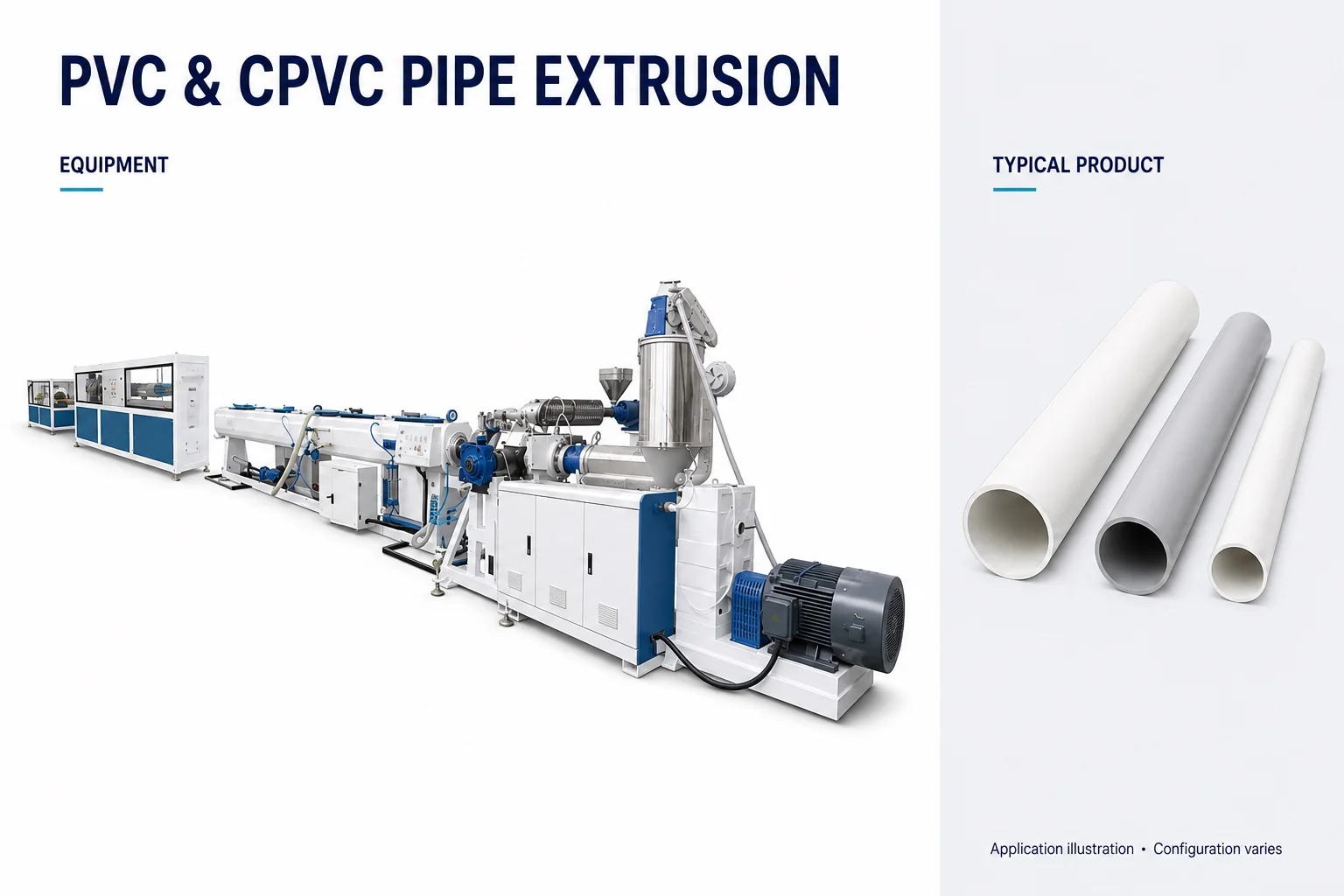
PVC & CPVC Pipe Extrusion Line
Define the project by formulation, pipe use, dimensions and joining method.
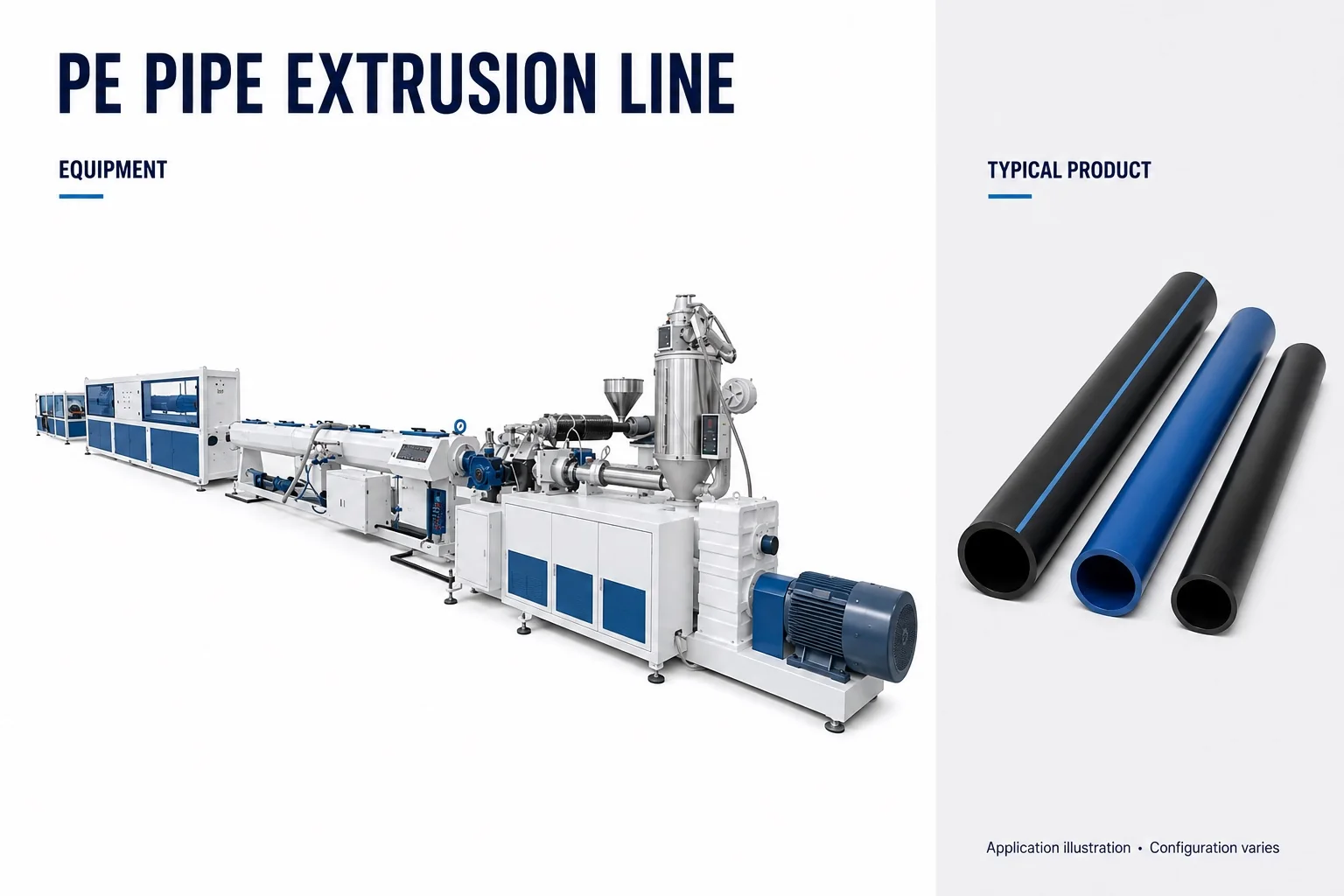
PE Pipe Extrusion Line
Define the resin, SDR or wall range, layer structure and finished-pipe handling.
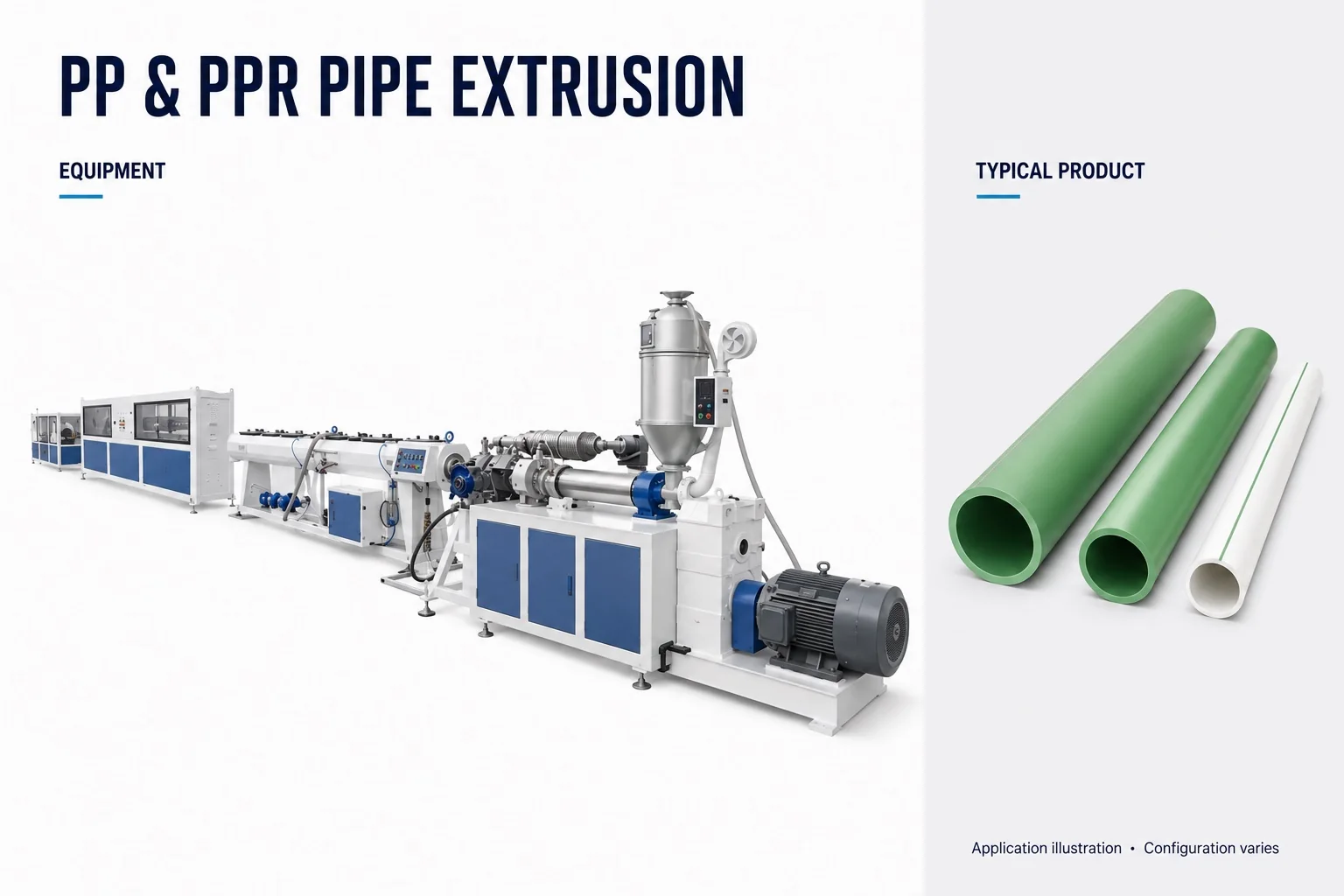
PP & PPR Pipe Extrusion Line
Define the standard, size range, layers, marking and factory conditions.
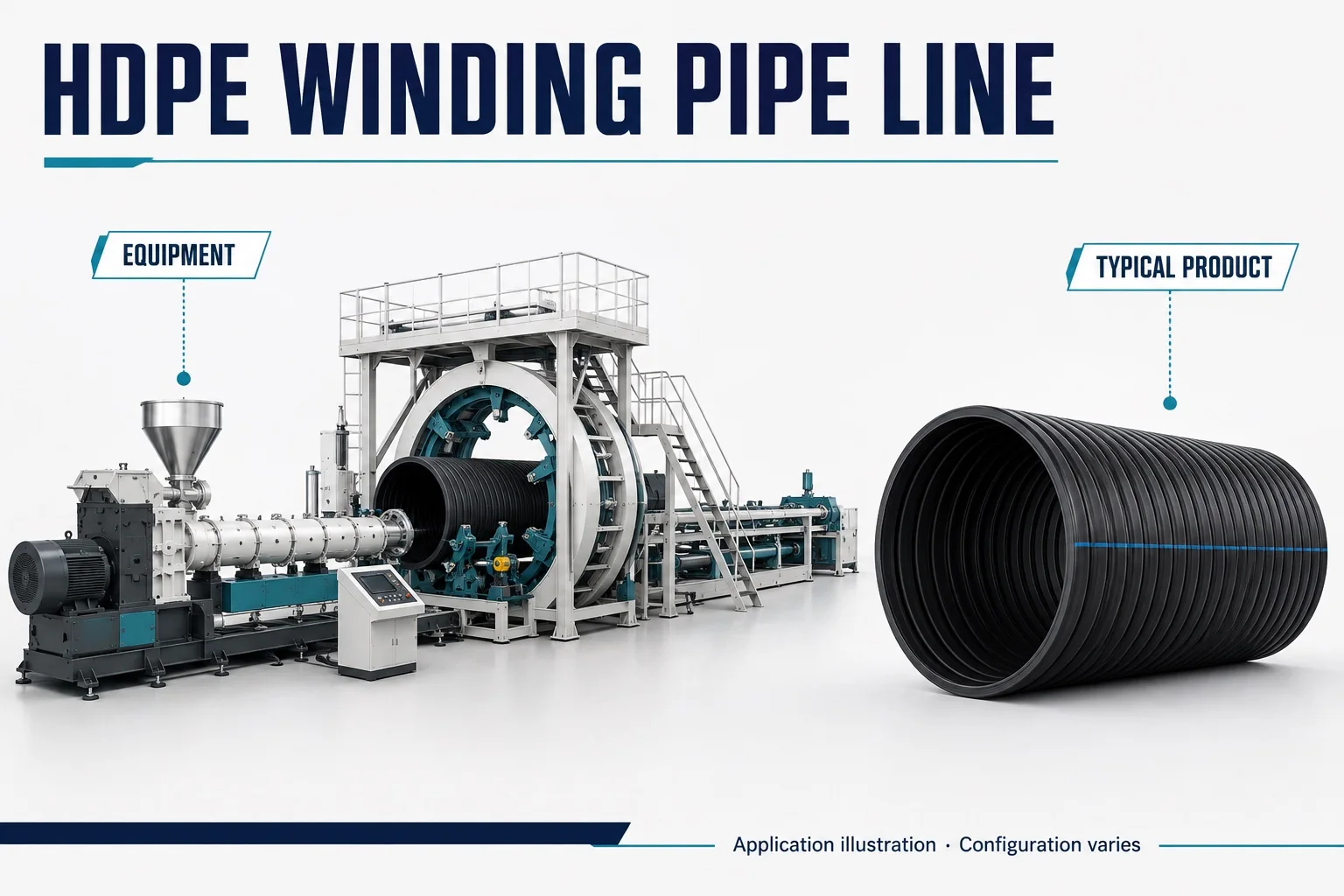
HDPE Large-Diameter Winding Pipe Line
Define the winding structure, diameter and stiffness range, joint design and workshop layout.
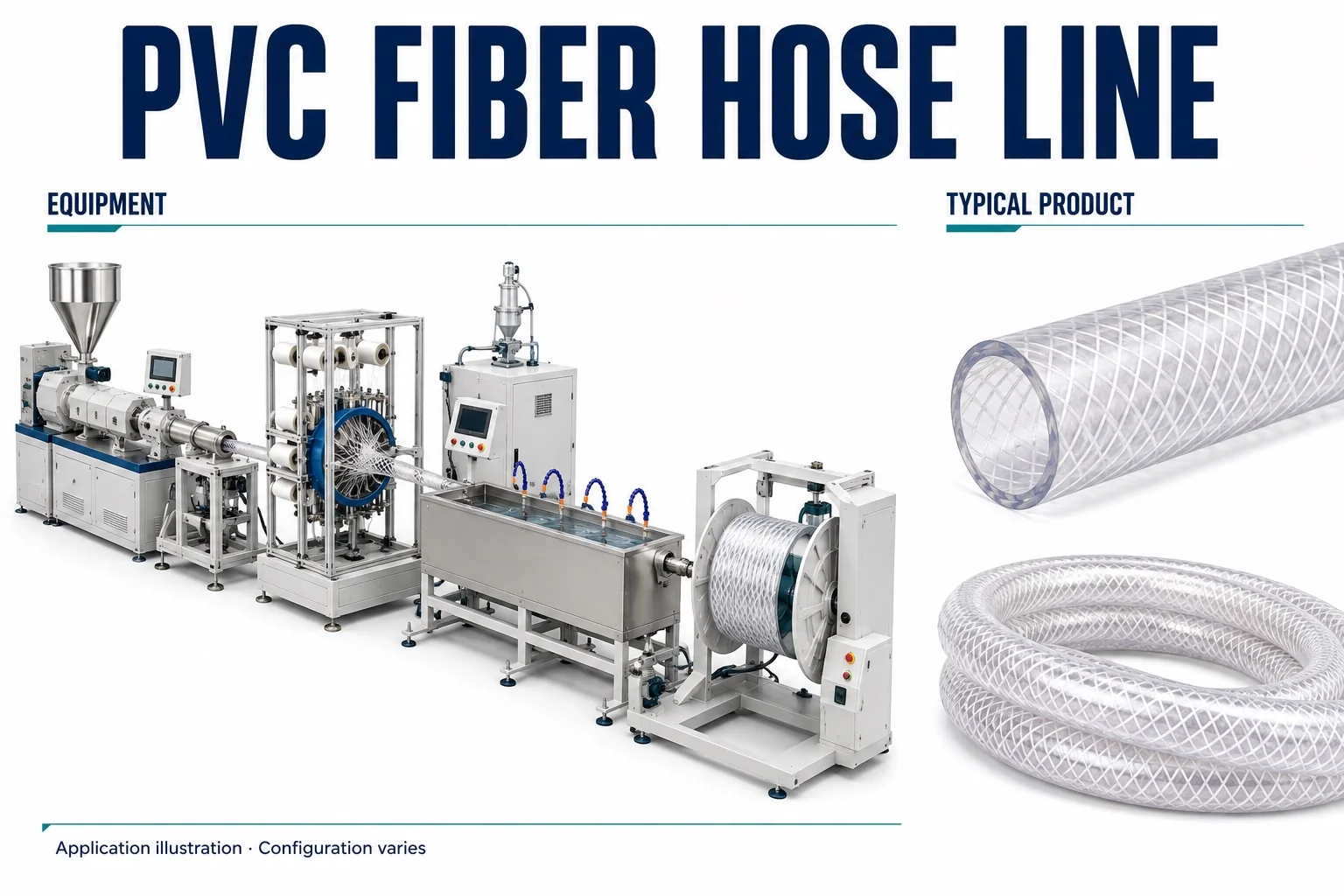
PVC Fiber-Reinforced Hose Line
Define the layered hose construction, PVC compound, braid material, sizes and coil format.
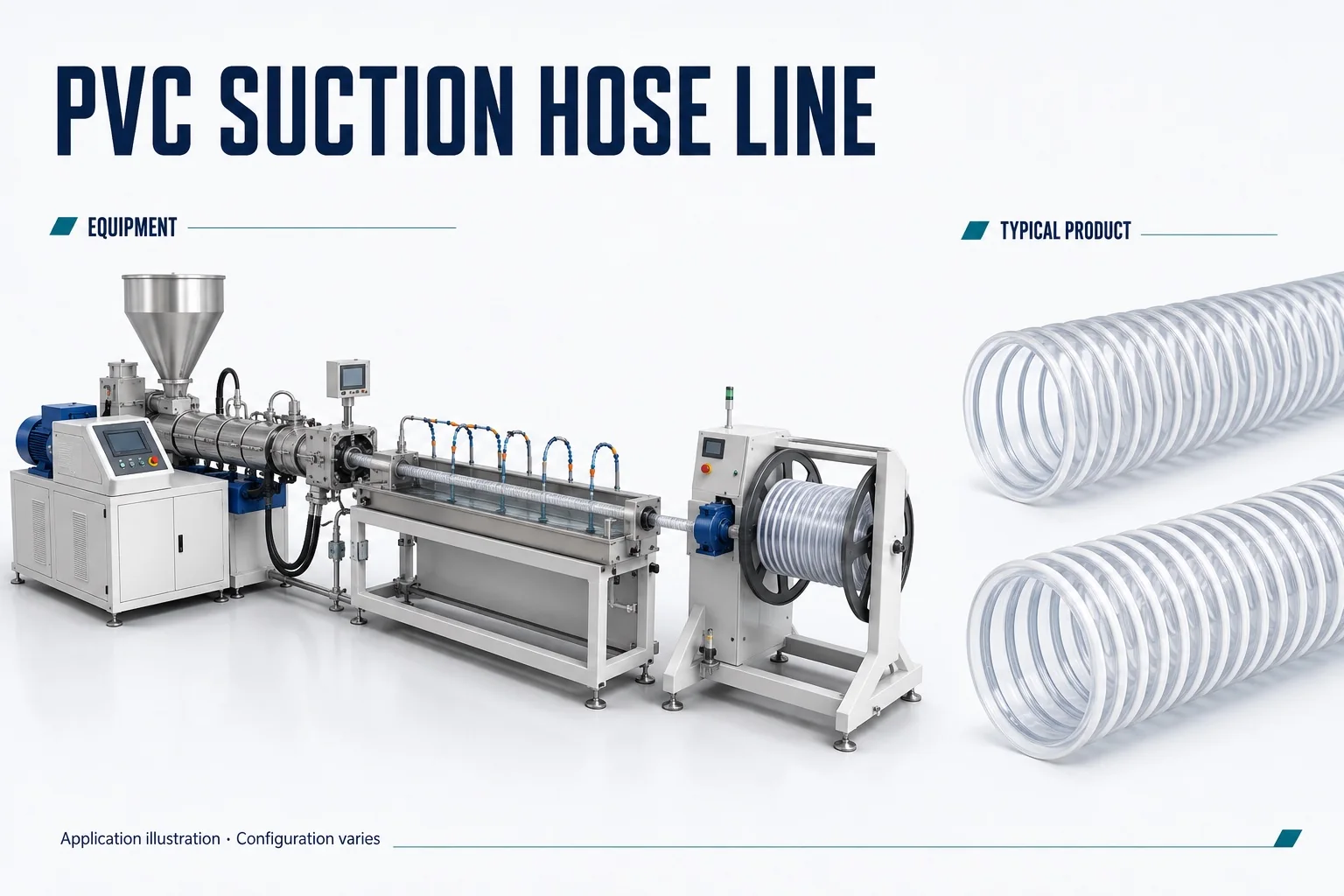
PVC Suction Hose Extrusion Line
Define the flexible and rigid materials, reinforcement geometry, sizes and winding needs.
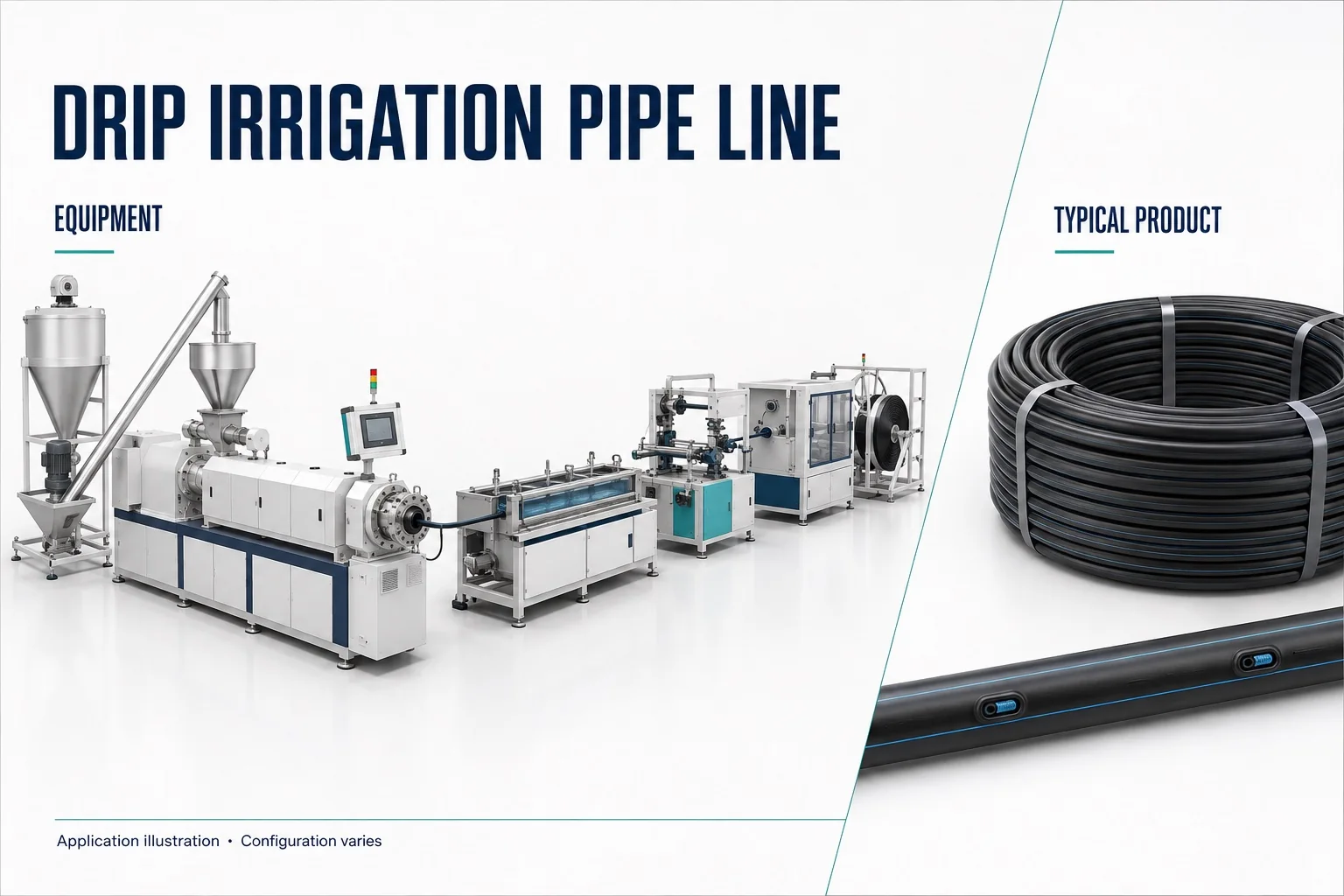
Drip Irrigation Pipe Extrusion Line
Define the pipe or tape geometry, emitter or outlet method, spacing, inspection and coil format.
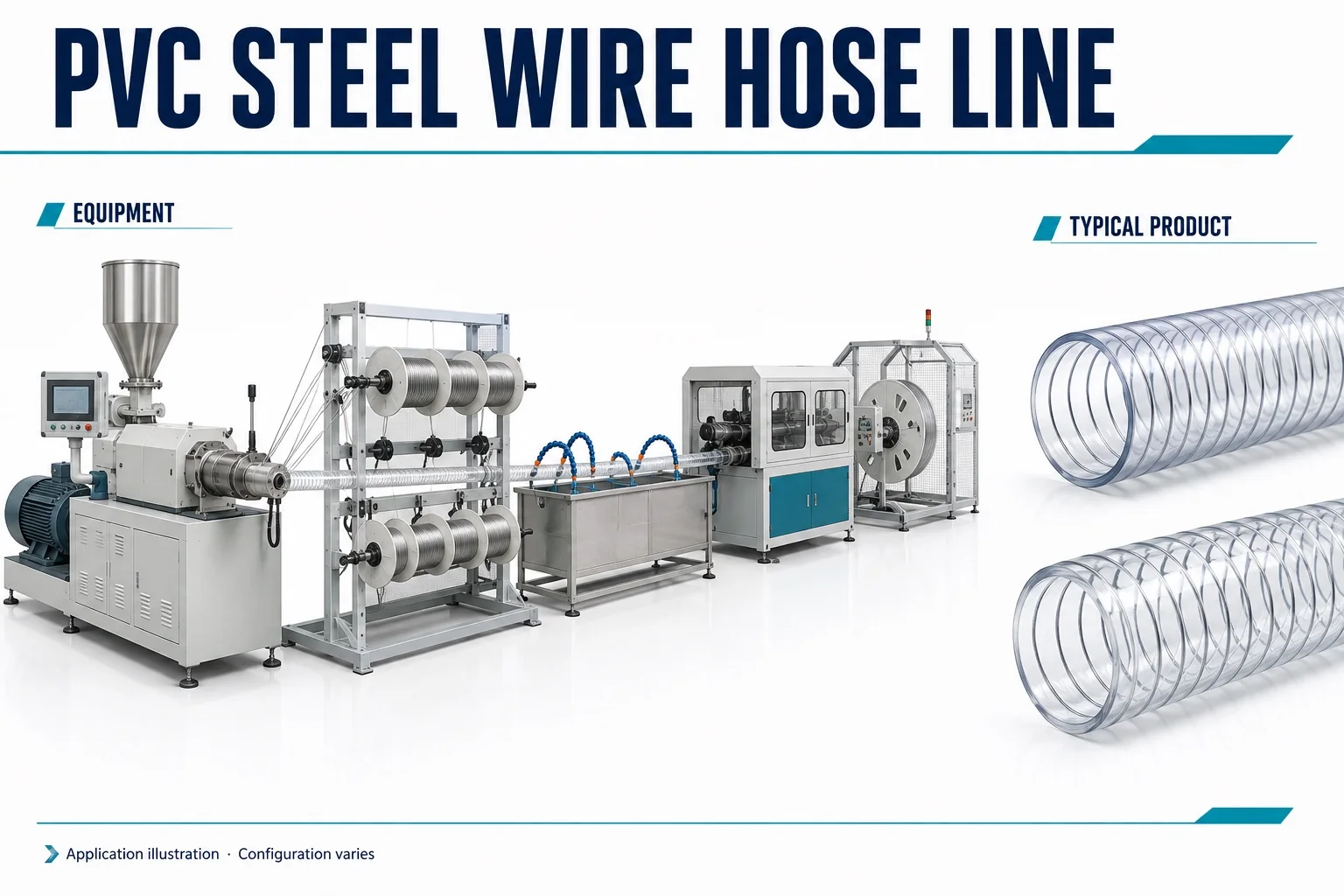
PVC Steel-Wire-Reinforced Hose Line
Define the PVC compound, hose dimensions, wire specification, coil format and product requirements.
All images are application illustrations. Final equipment scope and technical specifications are confirmed for each project.
More hose and small-tube applications
These pages cover distinct finished products that require their own reinforcement, perforation, small-tube or telescopic-forming workflow.
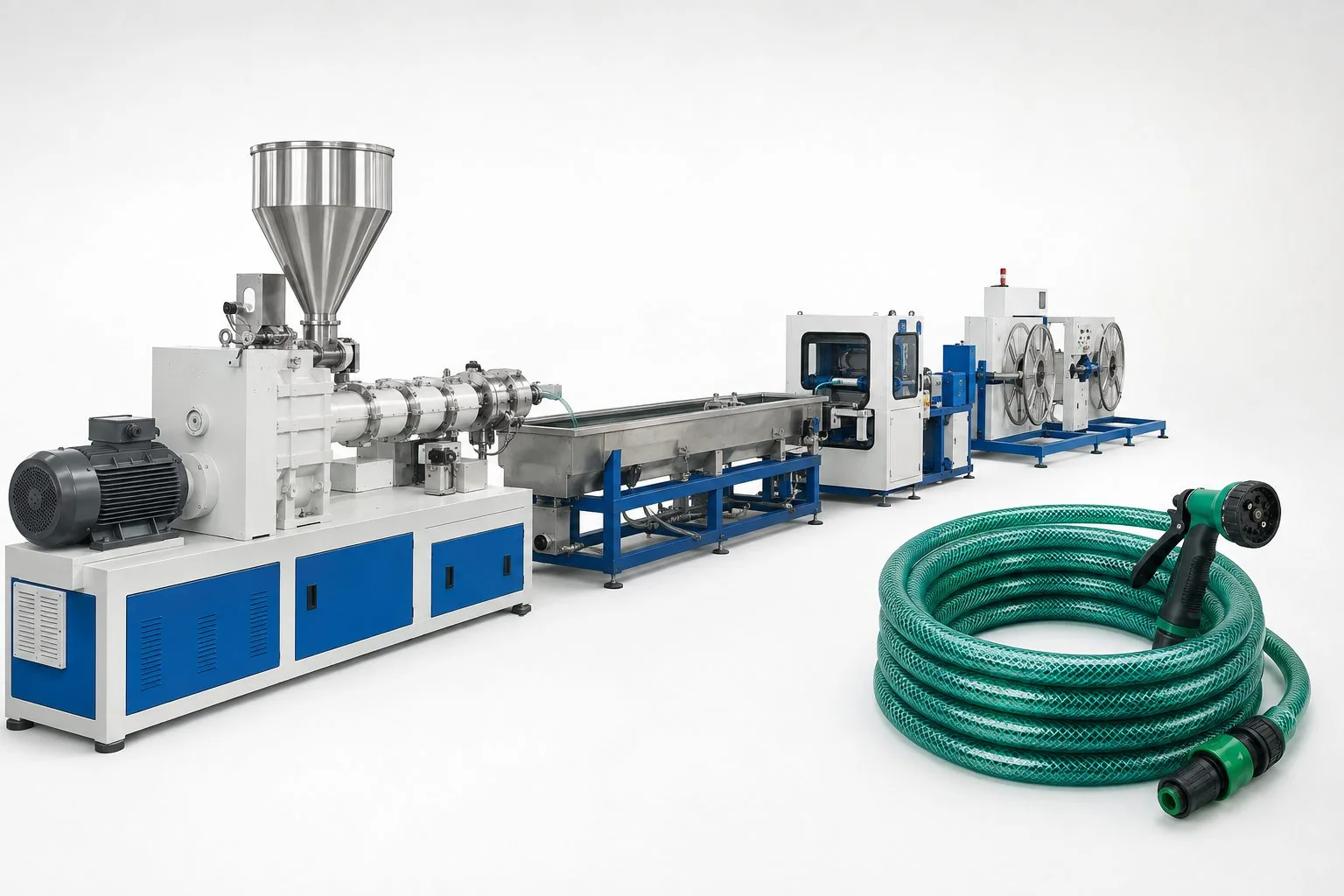
PVC Garden Hose Extrusion Line
Define a garden-hose project by construction, compound, reinforcement, dimensions, stripe, fittings and retail coil format.
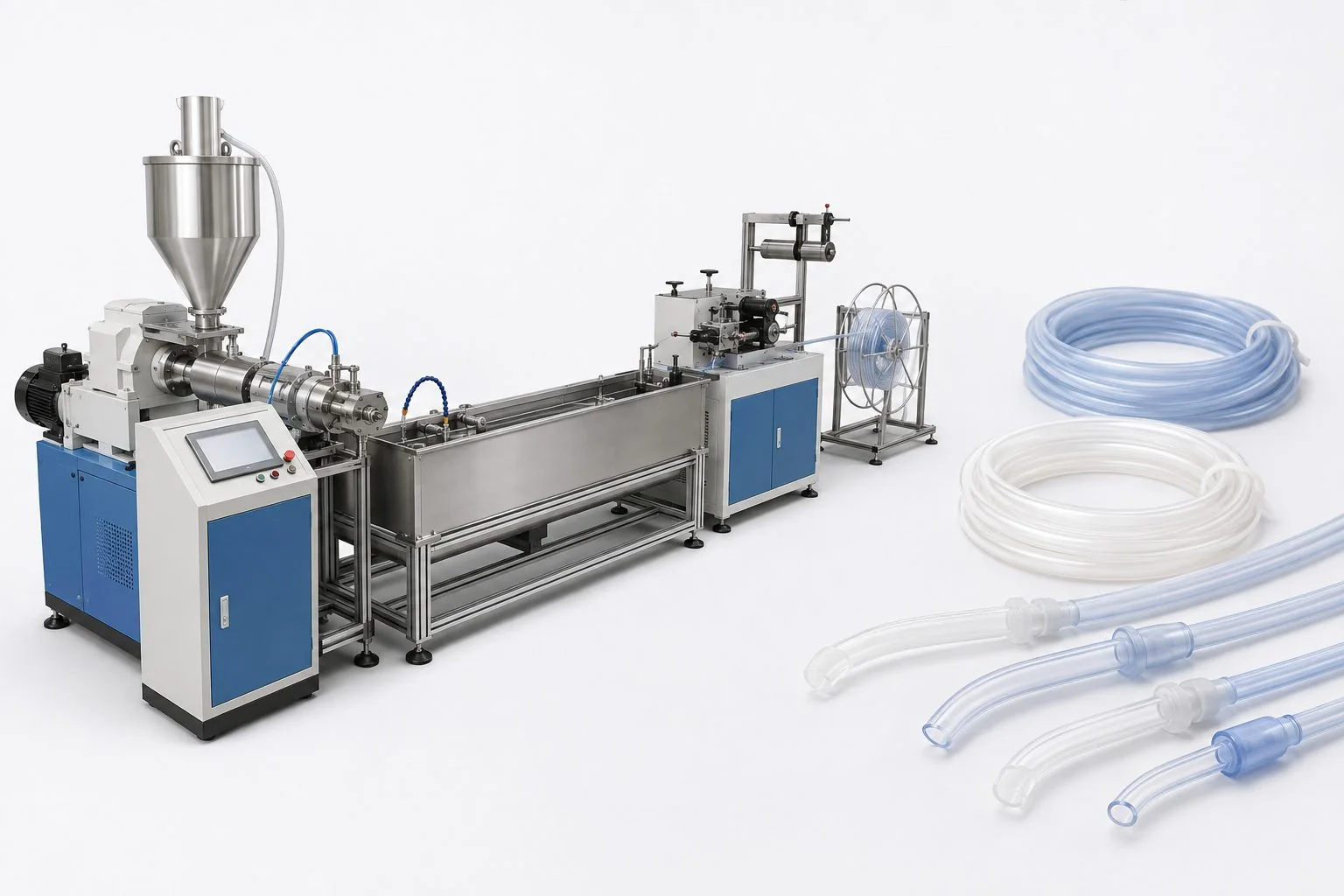
Dental Saliva Suction Tube Extrusion Line
Plan small-diameter suction tubing from the resin, dimensions, lumen, flexibility, tip interface and inspection method.
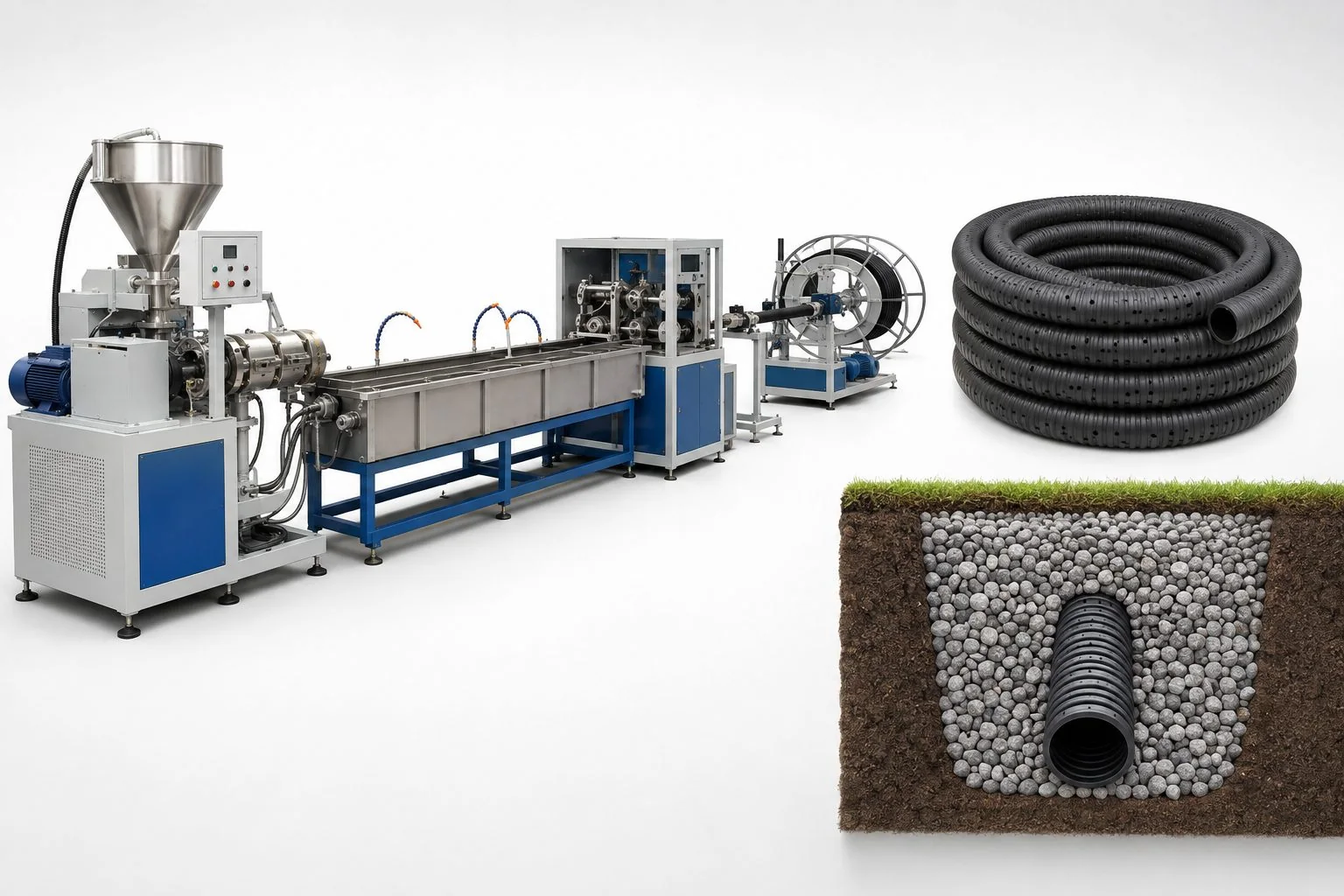
Perforated Drainage Hose Production Line
Define perforated drainage hose equipment by compound, corrugated profile, hole pattern, dimensions and coil handling.
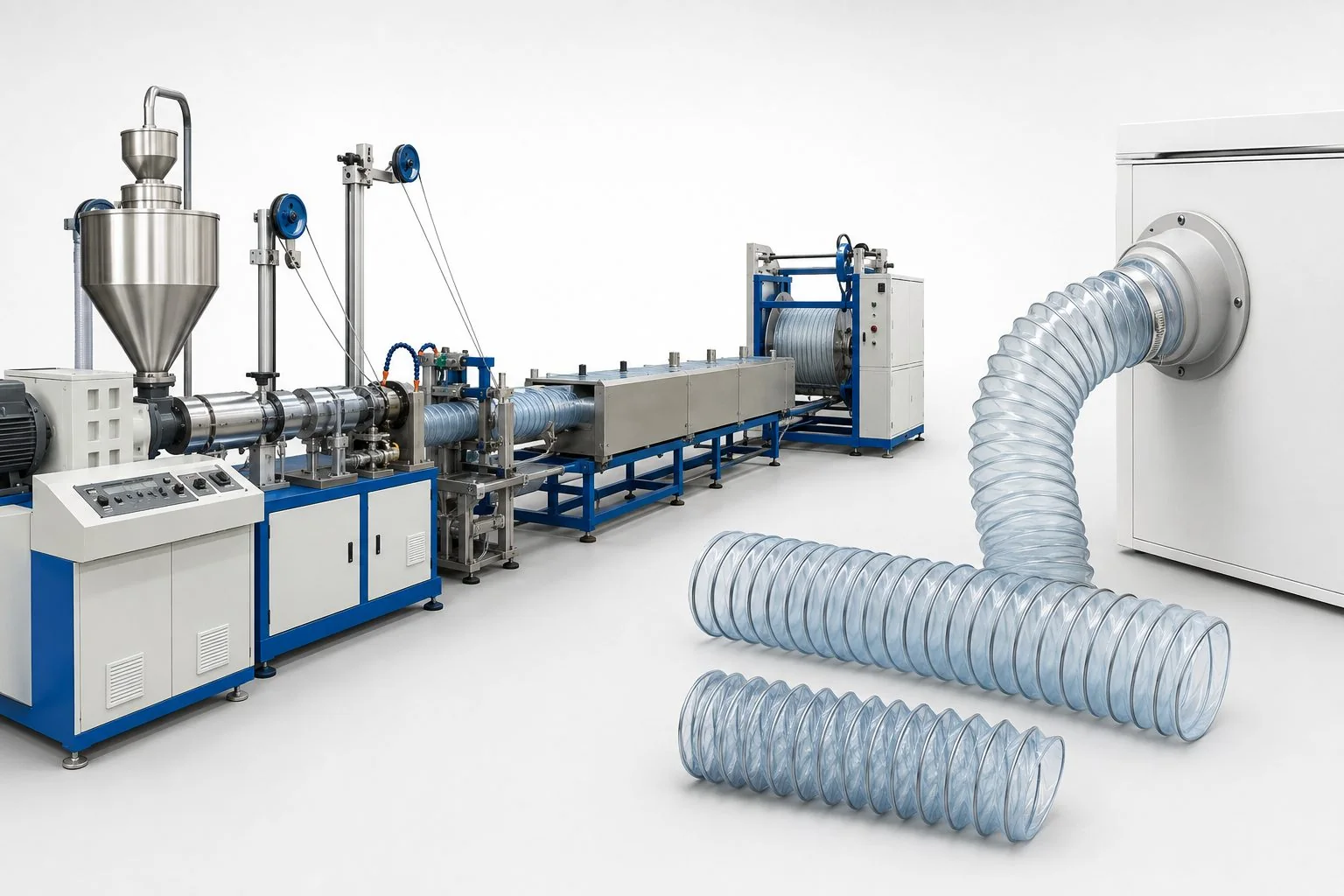
PP Steel-Wire Telescopic Tube Production Line
Plan steel-wire telescopic tubing from the resin, wall profile, helix, dimensions, extension and connection requirements.
Images are application illustrations. Final equipment scope and technical specifications are confirmed for each project.
How to define a plastic pipe extrusion line
A plastic pipe extrusion line should be defined around one finished-pipe requirement, not around a generic machine list. Start with the resin or formulation, the product standard or drawing, outside diameter and wall range, layer structure, joining method, marking, inspection and final delivery format. The target output also needs a clear basis: identify the pipe size, material, wall or weight basis and trial period to which the target applies.
These facts let the supplier review the process route and explain the function of each included unit. They also make it easier to compare two proposals that may use different names for similar equipment or divide standard and optional supply differently.
| Pipe or hose family | Project inputs that matter first | Equipment discussion to clarify |
|---|---|---|
| PVC or CPVC rigid pipe | Formulation, pipe use, dimensions, wall or pressure basis, socket or joining method | Material preparation, screw and die basis, cooling and calibration, haul-off, cutting and belling scope |
| PE or HDPE pipe | Resin grade, SDR or wall range, stripe or multilayer structure, coil or straight-length format | Feeding, extrusion and co-extrusion scope, sizing and cooling, haul-off, marking, cutting or winding |
| PP or PPR pipe | Product standard, resin, dimensions, layers, colour or marking and delivery format | Extrusion arrangement, tooling, cooling, pulling, cutting and finished-pipe handling |
| Reinforced or flexible hose | Inner and outer compounds, reinforcement material and geometry, dimensions, coil and fitting needs | Layer sequence, reinforcement process, cooling, traction, winding and inspection |
| Special tube application | Drawing or sample, material, profile, holes or outlets, end connection and functional checks | Tooling, forming or perforation, online inspection, cutting, winding and change parts |
Confirm every function in the production-line sequence
A typical proposal may refer to feeding, drying or mixing, extrusion, die tooling, vacuum calibration or another sizing method, cooling, haul-off, marking, cutting, winding, socket forming and product handling. This is a list of possible functions rather than a fixed package. The required sequence depends on the material and pipe design, and each quotation should identify what is included, optional or supplied by the buyer.
- Material preparation: state whether the feed is ready-to-process resin, a dry blend, a compound or recycled material, and describe any dosing or drying requirement.
- Extrusion and tooling: connect the extruder, die and any co-extrusion requirement to the verified formulation, product structure and size range.
- Sizing and cooling: provide water conditions, workshop temperature limits and product tolerances so the proposed method has a clear operating basis.
- Downstream handling: define marking, traction, cutting, socketing, winding, stacking and packing from the finished delivery format.
- Inspection and recycling: identify measurements, alarms, online checks and the treatment of start-up or off-spec material.
Questions to use when comparing pipe extrusion machine proposals
- Which product drawing, material and operating condition form the proposal basis?
- Which extruder, tooling, calibration, cooling and downstream functions are included?
- How many dies, sleeves, moulds or change parts are included for the stated size range?
- Which utilities, material-handling items and workshop preparations remain the buyer’s responsibility?
- How will output be measured, and for which material, size, wall and stable test period?
- Which finished-pipe dimensions, appearance points and functional requirements will be checked during a trial?
- Which manuals, electrical drawings, spare-parts lists and operating records will be delivered?
Use the pipe extrusion line selection guide to structure the early comparison, the quotation checklist to align commercial boundaries and the factory acceptance checklist to agree the trial evidence before shipment.
Pipe extrusion line FAQ
What information is needed for an initial pipe-line proposal?
Provide the pipe application, material or formulation, drawing or applicable standard, size and wall range, layer structure, joining method, target output with its basis, voltage, destination and required downstream functions. Photos or samples help when the product geometry is difficult to describe.
Can one extrusion line cover every pipe size?
The feasible product window depends on the confirmed process, extruder, tooling, calibration, cooling and downstream arrangement. Treat the required range as a project input and ask the supplier to identify the proposed range and all change parts in writing.
How should two line quotations be compared?
Compare them against the same material, product drawing, output measurement basis, utilities and acceptance conditions. Separate standard equipment, options, tooling, spare parts, buyer-supplied items and service responsibilities before comparing price.
Discuss a plastic pipe extrusion project
Send Mac Lee the pipe drawing or standard, resin or formulation, size and wall range, layers, joint or coil format, output basis, voltage and destination. RUNNING MACHINE will use the details to clarify a project-specific line scope.
See the main equipment sections in a pipe extrusion line
These edited equipment photographs illustrate three functions that may be discussed in a pipe project. They are equipment examples, not a fixed line configuration or performance claim. The required arrangement must be confirmed from the pipe material, dimensions, wall structure, output basis, joining method and factory utilities.
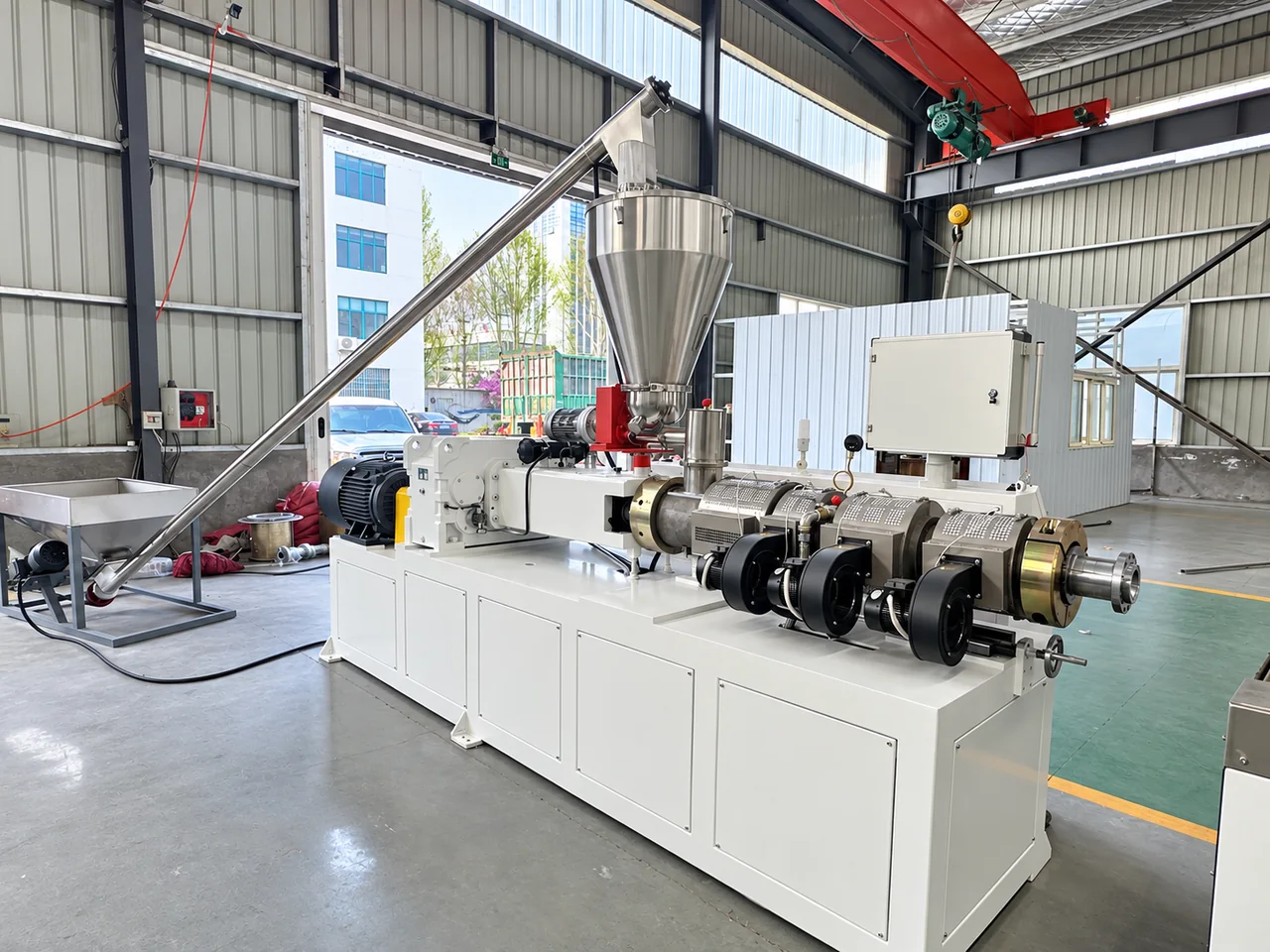
Material feeding and extrusion
Review the feed condition, extrusion process and tooling basis against the confirmed resin or formulation and pipe construction.
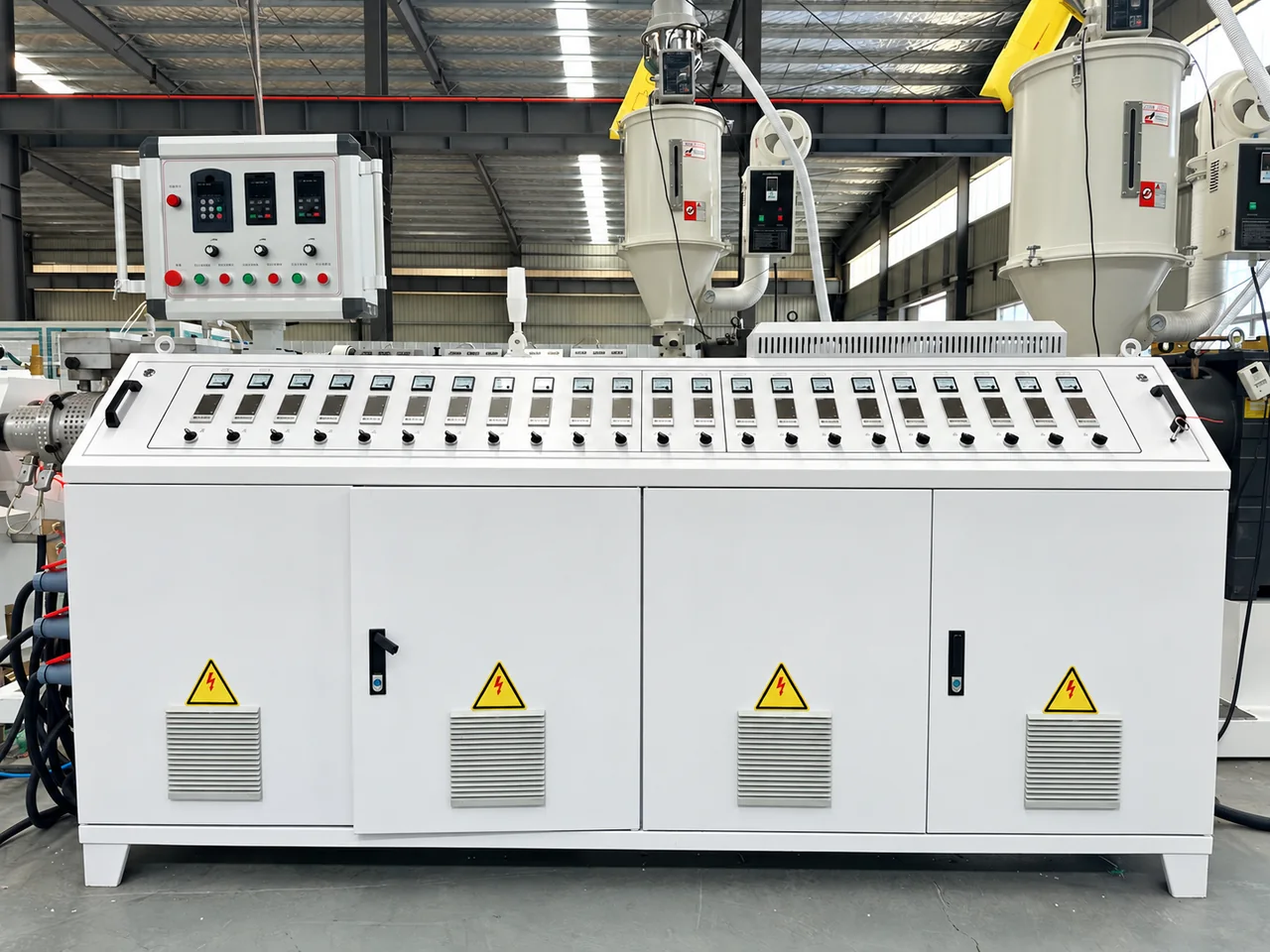
Heating and process control
Ask how the proposed controls, alarms and operating records support the agreed process and factory acceptance checks.
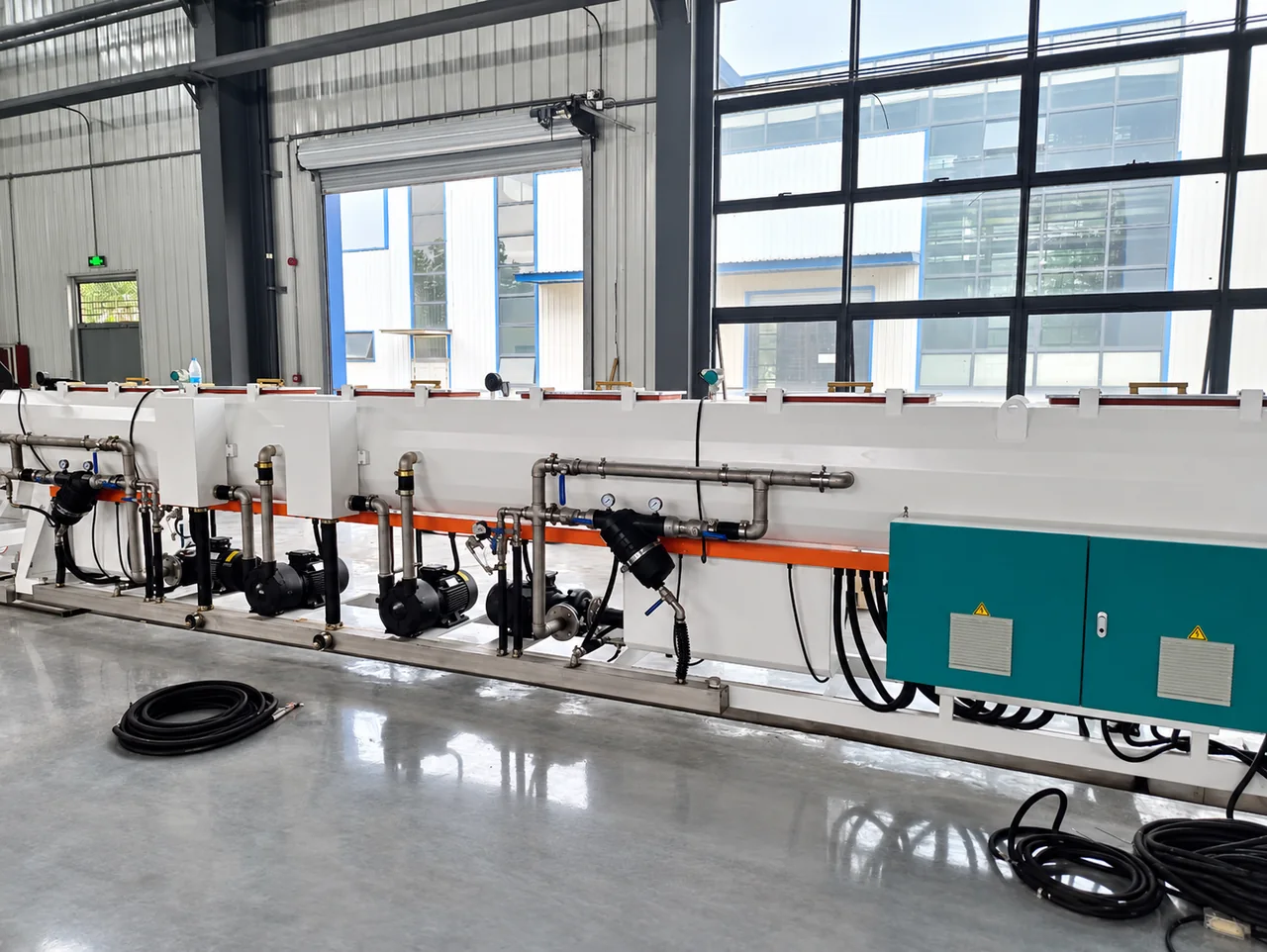
Calibration and cooling
Define the sizing method and water conditions from the pipe dimensions, tolerances, material and workshop environment.
Send the pipe drawing or standard, material, size and wall range, layer structure, output basis, voltage and destination through the plastic pipe project enquiry form.