FLEXIBLE CONDUIT PRODUCTION
Use this single-wall corrugated pipe machine category to choose a relevant application or equipment page. If your product requirements are already defined, open the single-wall corrugated pipe production line page to prepare a project-specific proposal.
Prepare a single-wall line proposal
What the line is used to make
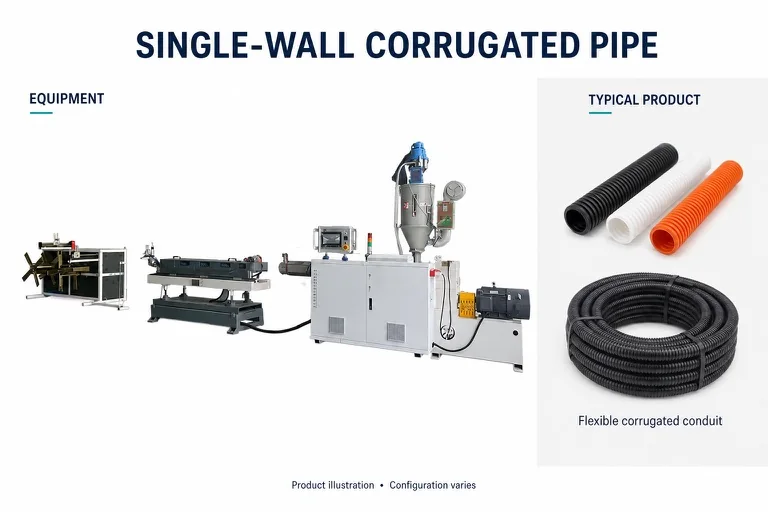
Single-wall corrugated pipe equipment is used for flexible corrugated tubing such as cable protection conduit, wire harness tube and other lightweight corrugated tube applications. The required process depends on the polymer, tube dimensions and profile design.
Typical equipment scope
- Material feeding and extrusion equipment selected for the stated resin
- Corrugation forming section and mould blocks matched to the requested profile
- Cooling and guiding arrangement
- Cutting or coiling equipment according to the delivery format
- Electrical controls and agreed auxiliary equipment
This list describes a discussion framework rather than a fixed specification. RUNNING MACHINE confirms the actual equipment scope only after reviewing the product requirement.
What to send for a useful quotation
- Material or planned formulation
- Outside and inside diameter range
- Corrugation drawing, pitch or sample photo
- Target output and preferred line speed, if known
- Coil length or cut length
- Factory voltage, frequency and available space
Choose a single-wall corrugated pipe application
Start with the finished tube, material and application. Each page explains the inputs needed for a project-specific equipment scope and quotation.
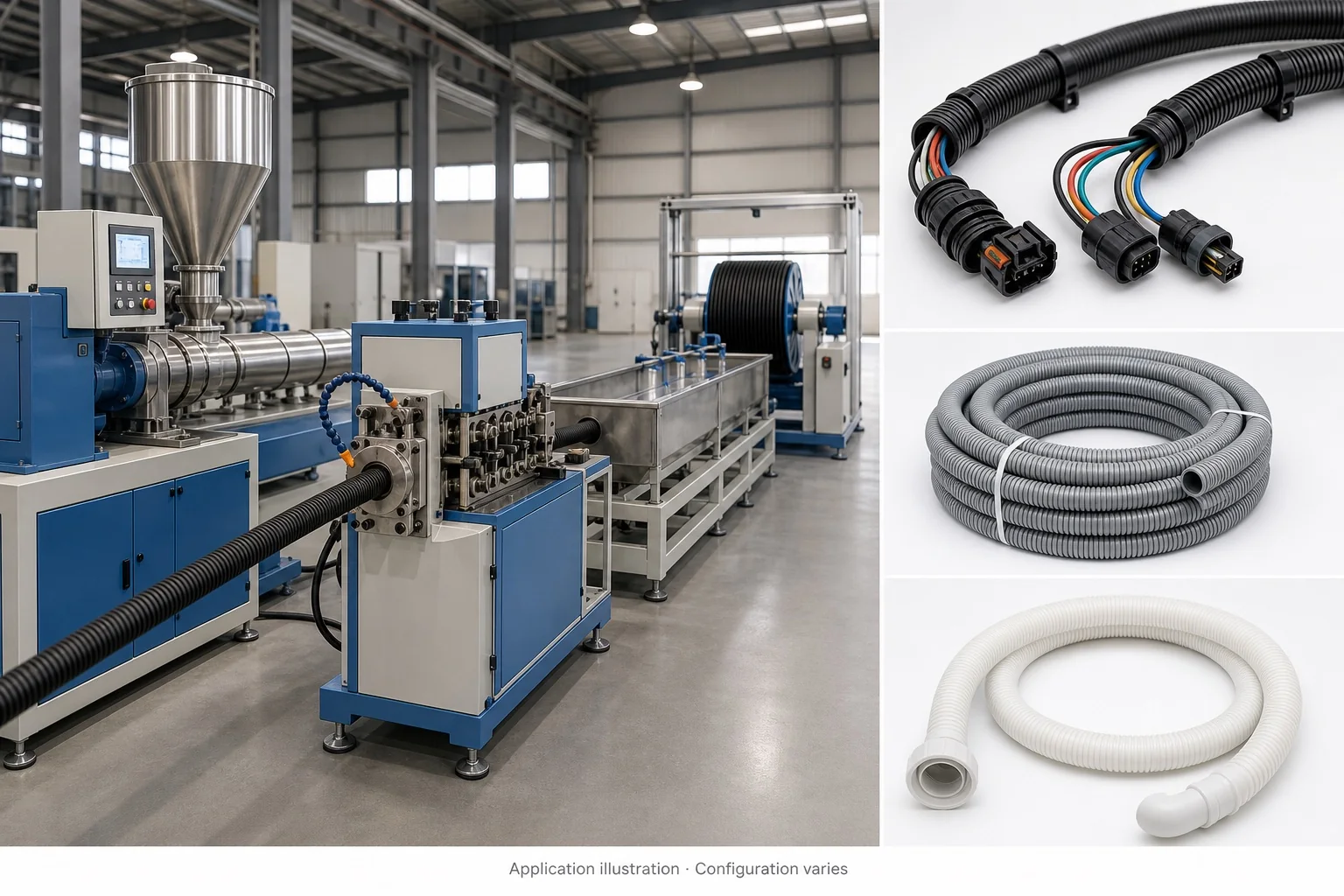
Single-Wall Corrugated Pipe Production Line
Define the resin, pipe profile, size range, cooling method, winding and output target.
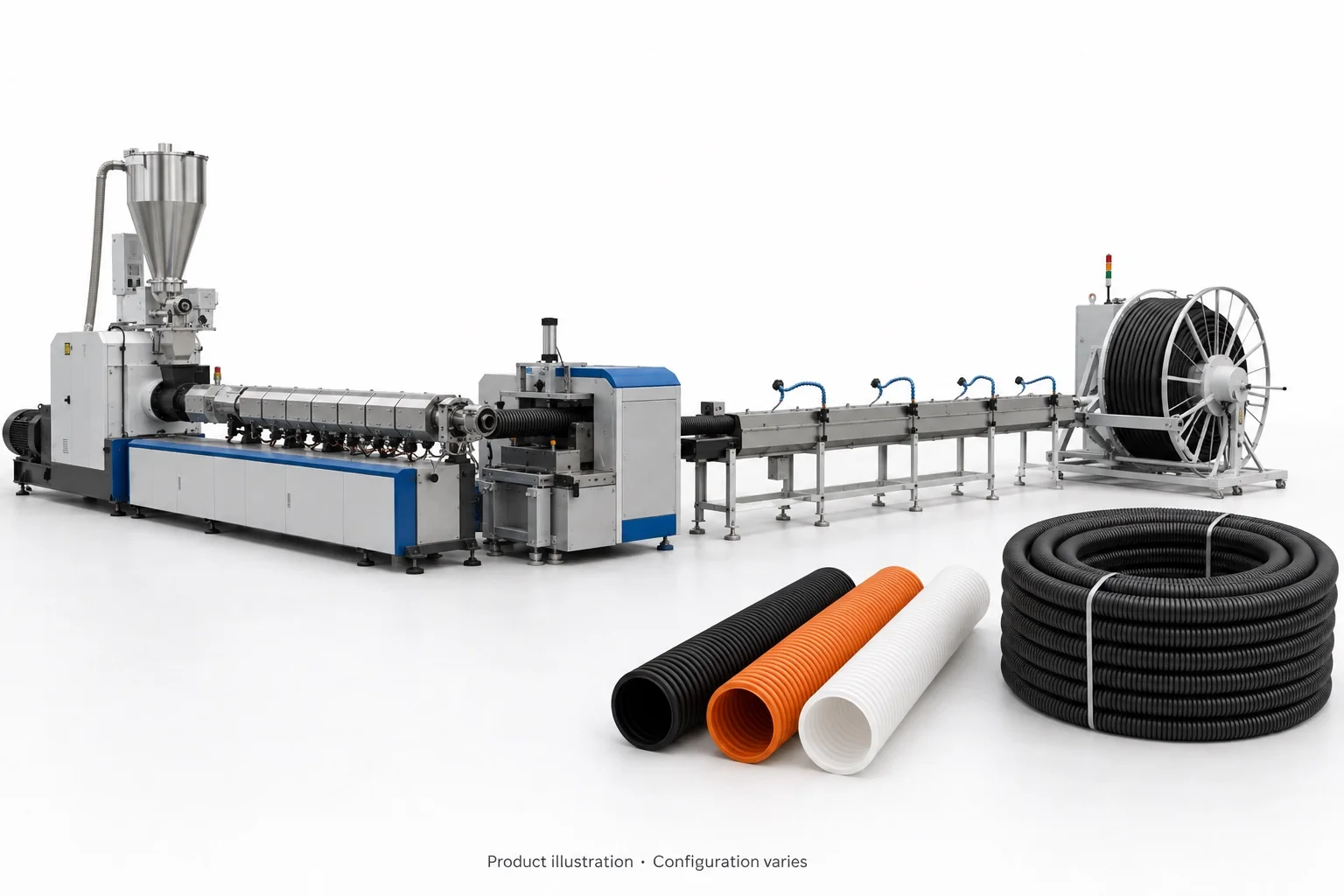
Ultra-High-Speed Single-Wall Corrugated Pipe Line
Define the verified production target, product window, cooling conditions and acceptance method.
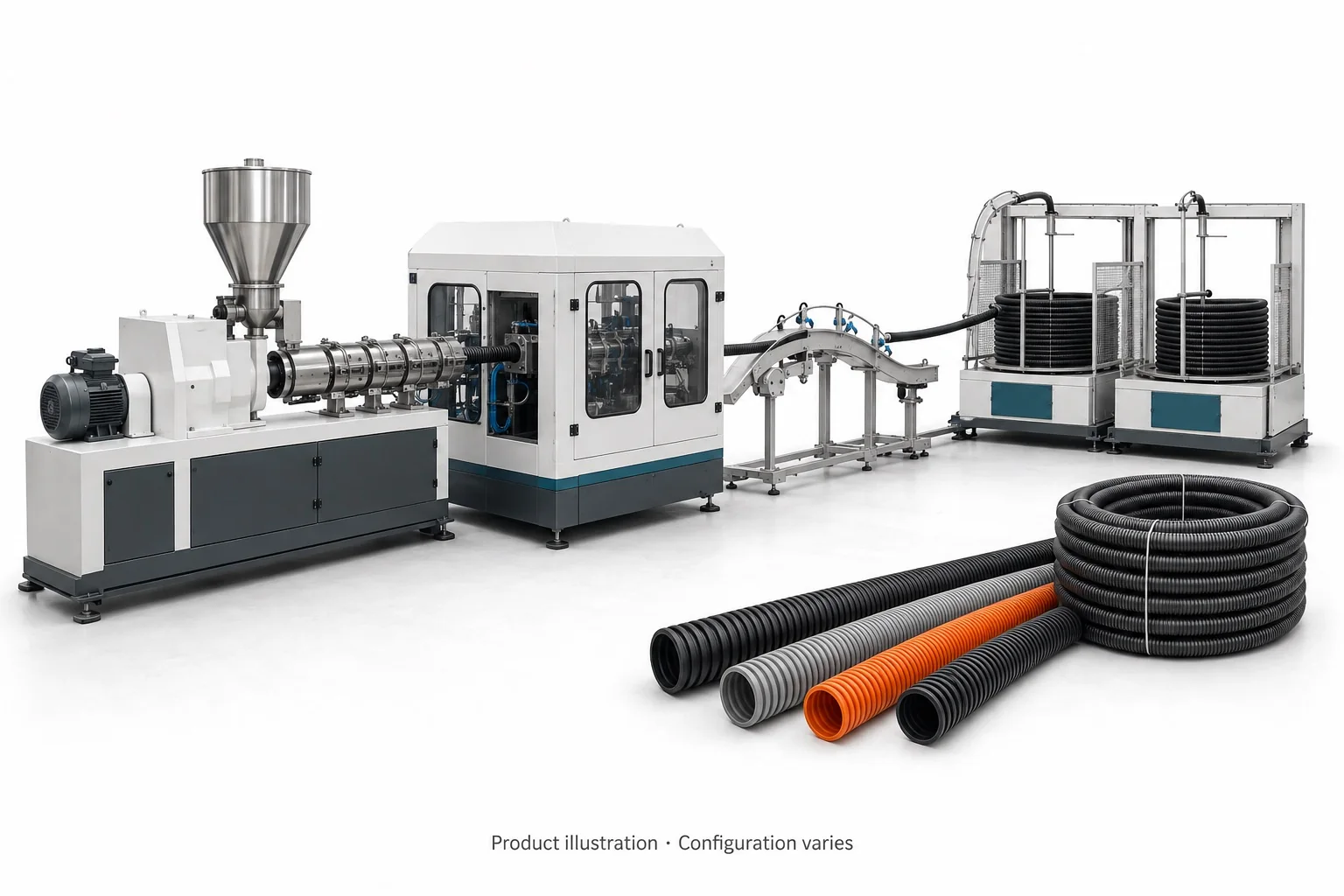
High-Speed Single-Wall Corrugated Pipe Extrusion Line
Balance the production target with product mix, forming stability, cooling and changeovers.
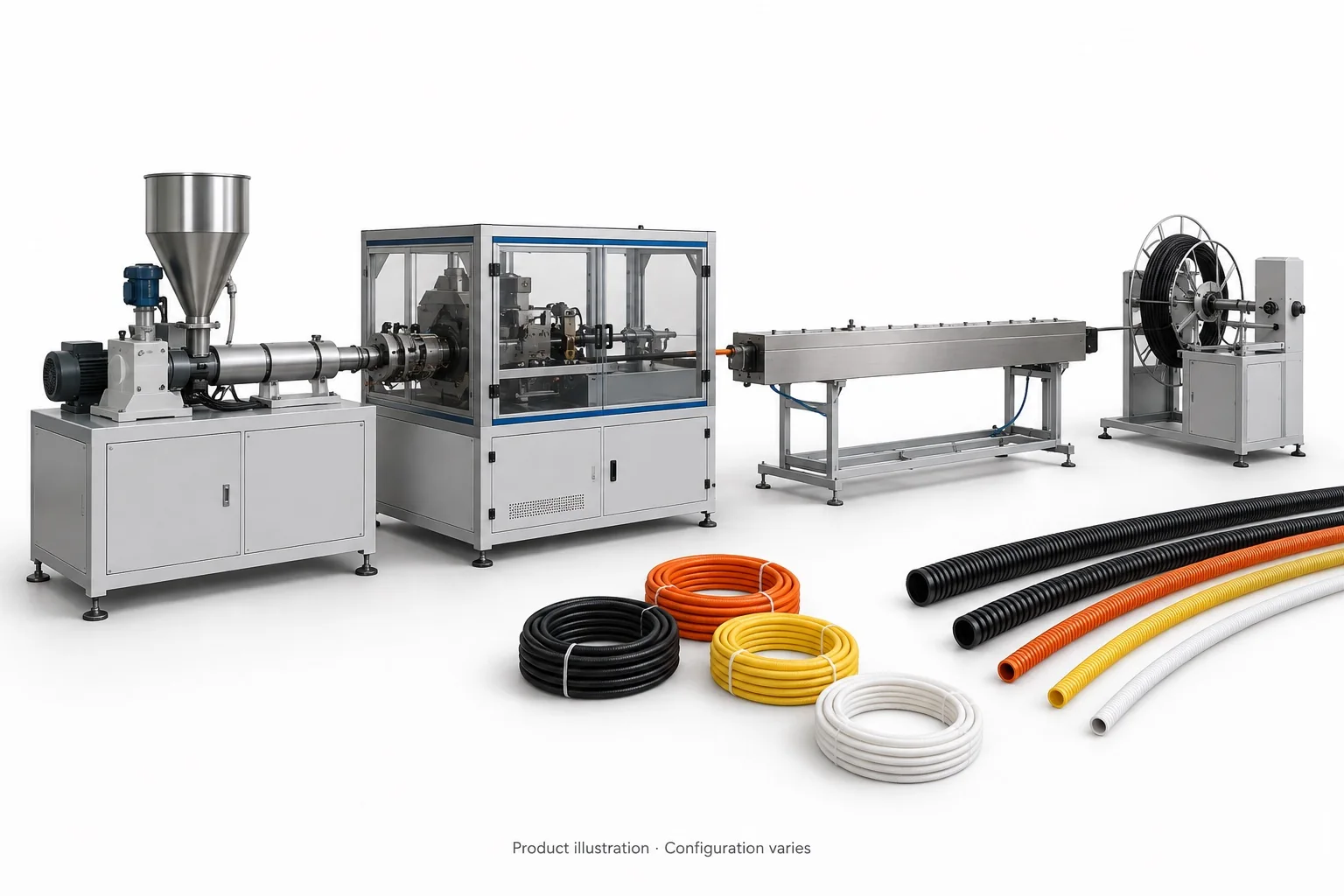
Small-Diameter High-Speed Single-Wall Corrugated Pipe Machine
Plan fine corrugated tubing around dimensions, profile control, inspection and winding.
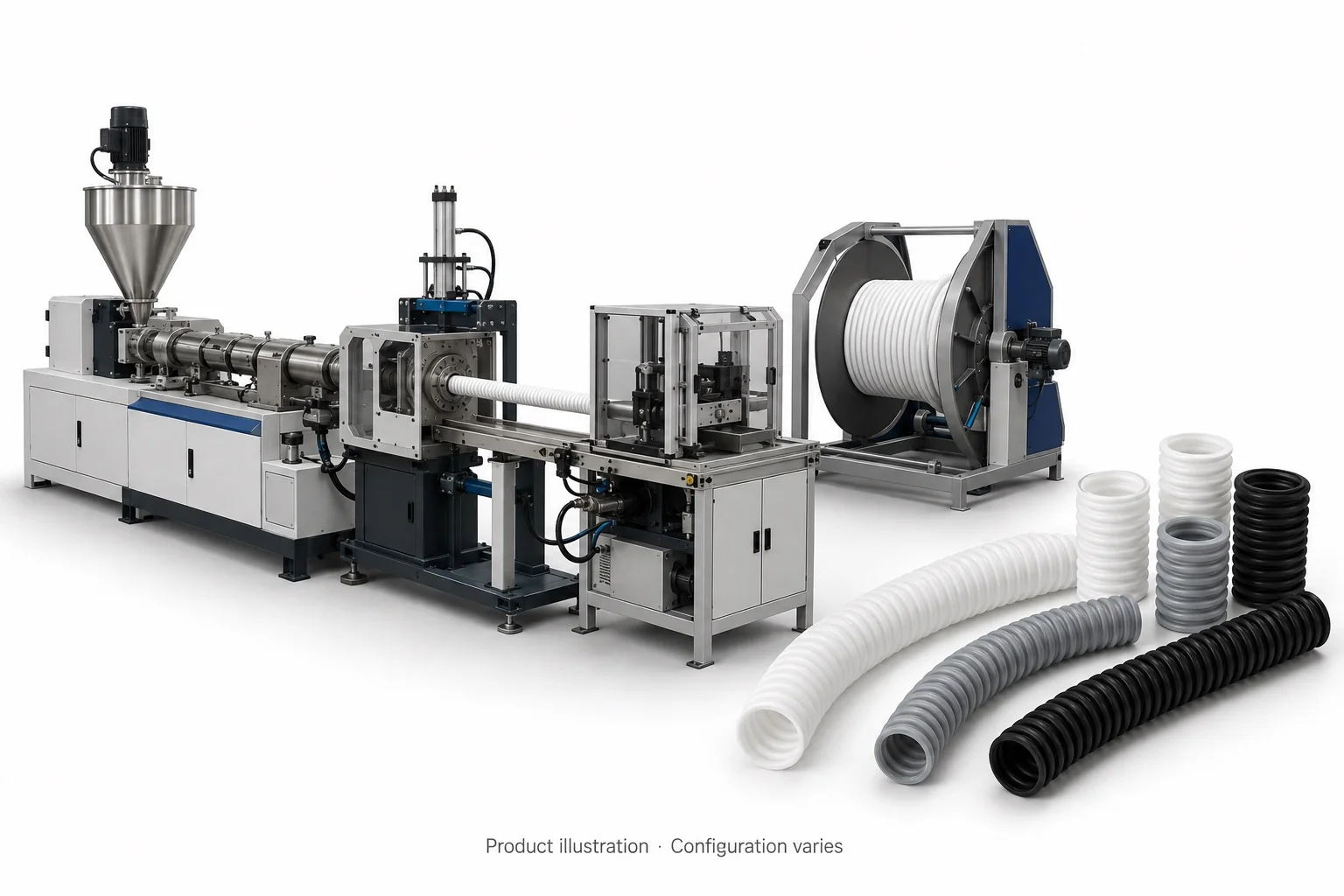
Shrinkable Single-Wall Corrugated Pipe Machine
Define compressed and extended lengths, end geometry, cutting and packaging requirements.
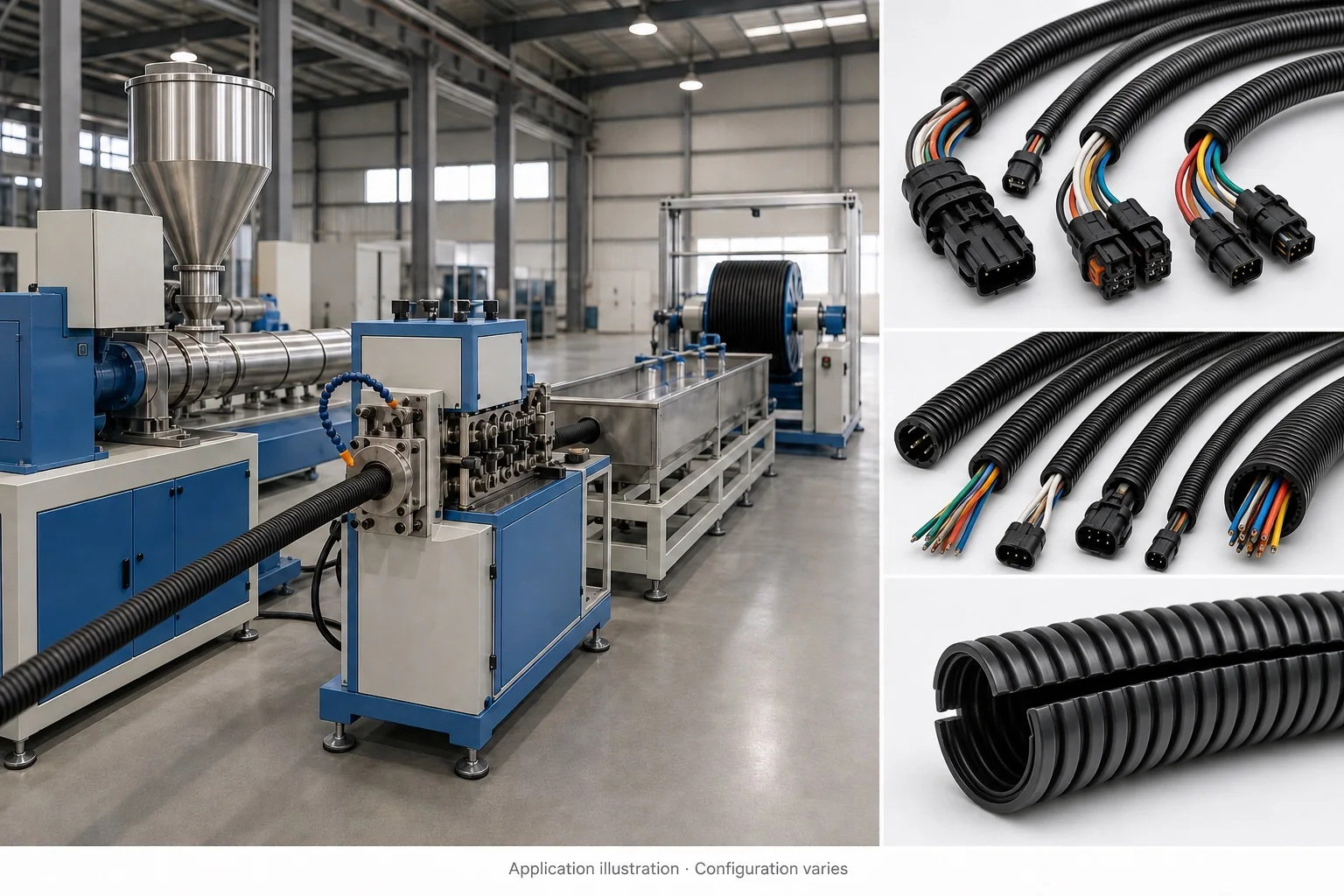
Automotive Wire-Harness Corrugated Tube Machine
Define slit or unslit tube, resin, dimensions, flexibility, inspection and coil format.
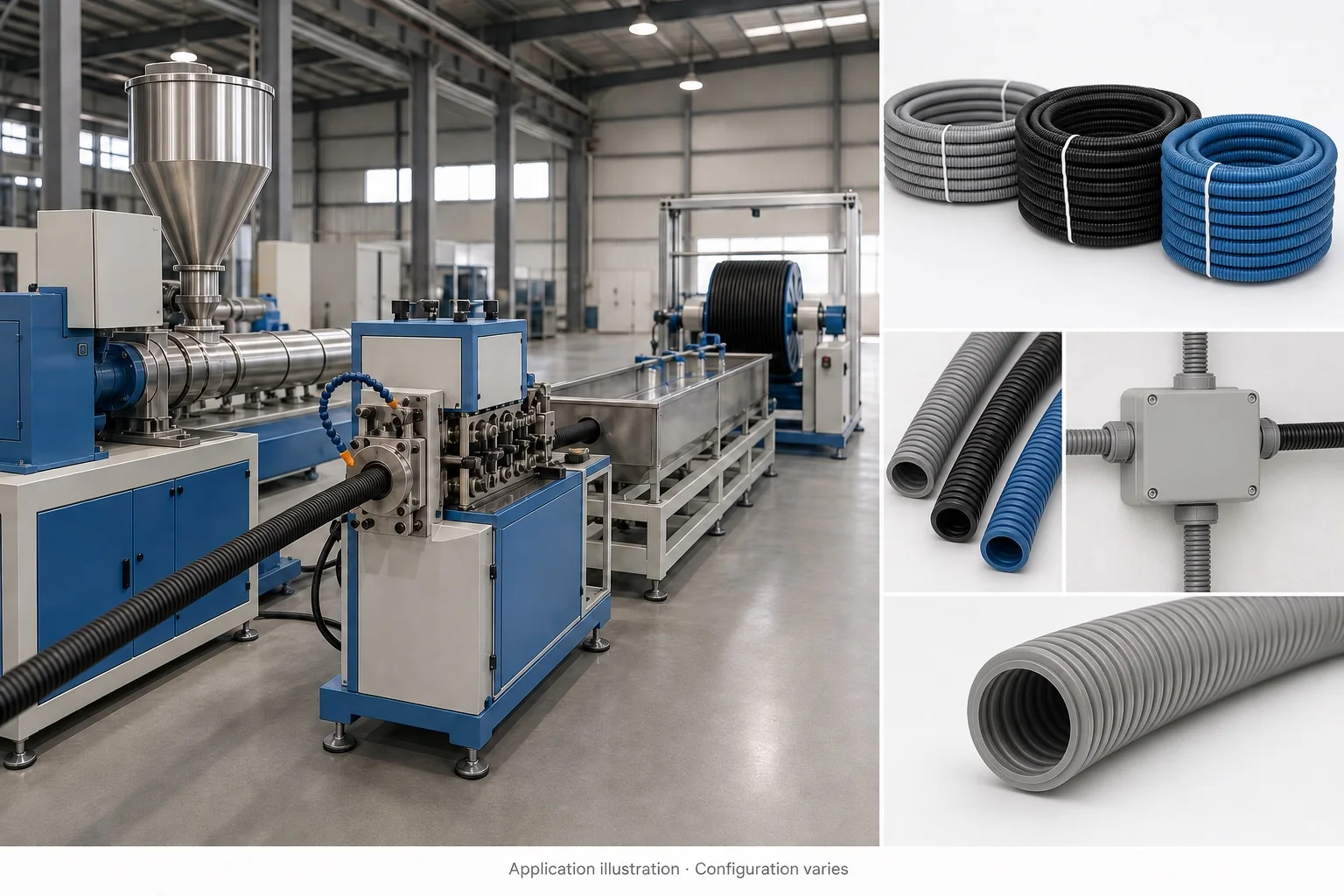
Electrical Conduit Corrugated Pipe Machine
Define conduit material, profile, sizes, installation requirement, marking and packaging.
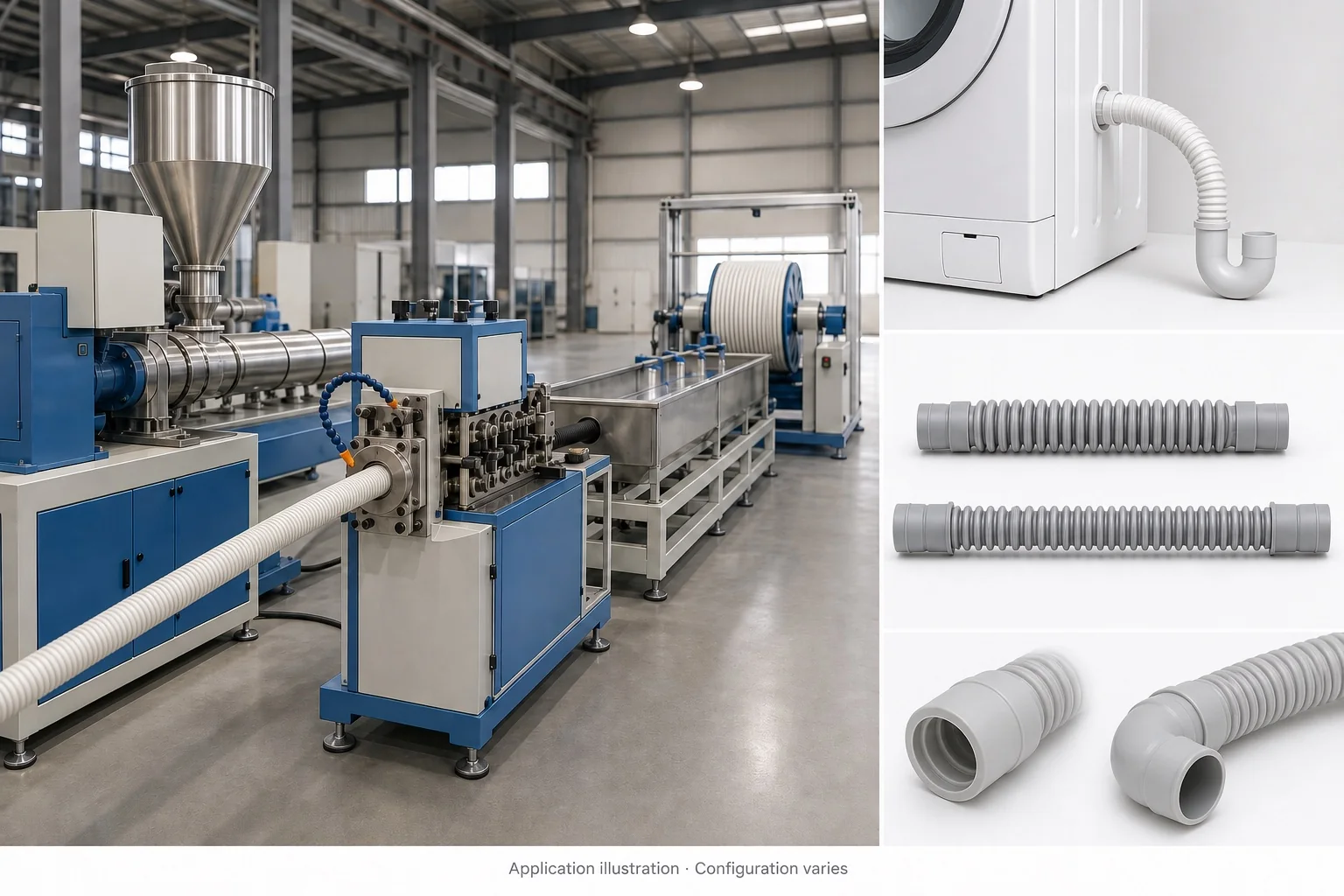
Corrugated Drain Hose Production Line
Define fixed or extendable hose, end connection, size range, cutting and package length.
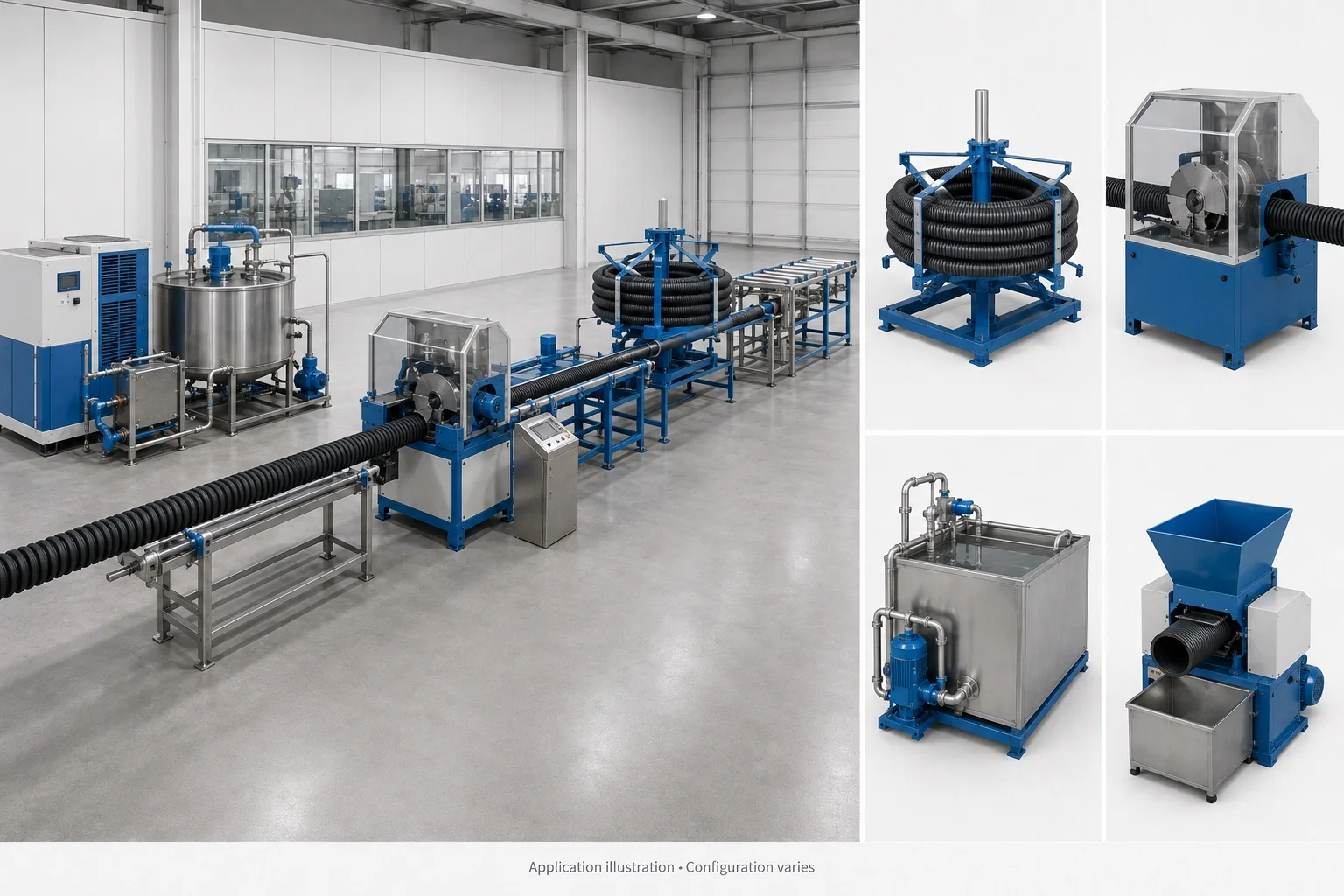
Corrugated Pipe Auxiliary Equipment
Separate required material handling, cooling, cutting, winding and scrap equipment.
All images are application illustrations. Final equipment scope and technical specifications are confirmed for each project.
Not sure which wall structure fits your product? Use the single-wall vs double-wall corrugated pipe machine guide to compare product inputs, downstream scope and factory requirements.
Prepare the tube specification before comparing machines
A useful single-wall corrugated pipe machine proposal starts with the finished tube. Send a drawing, a clear cross-section or representative samples together with the application. The same outside diameter can describe products with different corrugation geometry, wall behaviour, flexibility, fittings and delivery formats, so diameter alone is not enough to define a line.
| Decision area | Information to provide | Why it changes the equipment discussion |
|---|---|---|
| Material | Polymer, known grade or formulation, colour and recycled-content requirement | Material behaviour affects feeding, extrusion, cooling and the production trial basis. |
| Tube geometry | Outside and inside dimensions, wall section, corrugation pitch and acceptable tolerance basis | The product drawing guides tooling, forming and inspection requirements. |
| Application | Electrical conduit, wire-harness protection, drainage hose, appliance hose or another defined use | Application determines the checks for flexibility, end connection, slit or unslit form and marking. |
| Delivery format | Coil size, cut length, winding tension, slitting, end finishing and packing method | These inputs define the downstream scope after forming and cooling. |
| Project basis | Target output with its measurement basis, voltage, utilities, workshop limits and destination | A comparable proposal needs the same operating boundary and factory conditions. |
Define the complete single-wall line boundary
Ask each supplier to identify the function of every included unit. A project may involve material feeding, extrusion, die tooling, corrugation forming, cooling, pulling, marking, online slitting, cutting or winding, inspection and handling. The actual sequence depends on the product; these functions should be confirmed against the drawing instead of copied from a generic station list.
- Separate standard supply, optional equipment and buyer-supplied utilities.
- List every die, mould block, calibrating part and change part included in the quotation.
- State how line output will be measured and which product, material and test period apply.
- Agree which dimensions, appearance points, coil or cut format and functional tests will be checked during a trial.
- Record the manuals, electrical drawings, spare-parts list and training scope expected with delivery.
Use the single-wall versus double-wall corrugated pipe guide when the product structure is still being selected. Before sending an RFQ, review the quotation checklist; before shipment, use the factory acceptance checklist to define evidence and open-item closure.
Discuss a single-wall corrugated tube project
Send Mac Lee the tube drawing or sample information, material, size range, application, delivery format, output basis, voltage and destination. RUNNING MACHINE will use these inputs to clarify the equipment boundary before preparing a project-specific proposal.