STRUCTURED DRAINAGE PIPE PRODUCTION
Use this double-wall corrugated pipe machine category to choose a relevant application or equipment page. If your product requirements are already defined, open the double-wall corrugated pipe production line page to prepare a project-specific proposal.
Prepare a double-wall line proposal
What this equipment is used for
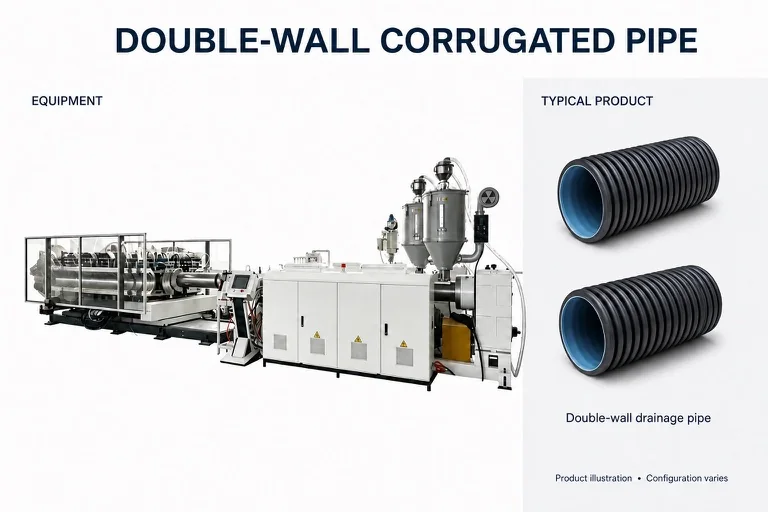
Double-wall corrugated pipe lines are planned for structured pipe with a corrugated outer wall and a smoother inner flow surface. Typical applications may include drainage, conduit and ventilation projects, depending on the pipe design and applicable requirements.
Typical equipment scope
- Material preparation and extrusion units for the requested pipe structure
- Corrugator and mould blocks matched to the profile drawing
- Forming, cooling and vacuum systems as required by the design
- Cutting, socketing or downstream handling selected for the finished pipe
- Electrical controls and agreed auxiliary equipment
The final line arrangement depends on the material, product drawing, required output and factory conditions. This page is a planning guide rather than a fixed technical specification.
What to confirm before quotation
- Resin and any planned recycled-content requirement
- Pipe outside diameter range and wall/profile drawing
- Required pipe length and joining method
- Target output or project production goal
- Applicable product standard, if the buyer has one
- Power supply, cooling-water conditions and available floor space
Choose a double-wall corrugated pipe application
Start with the finished tube, material and application. Each page explains the inputs needed for a project-specific equipment scope and quotation.
Double-Wall Corrugated Pipe Production Line
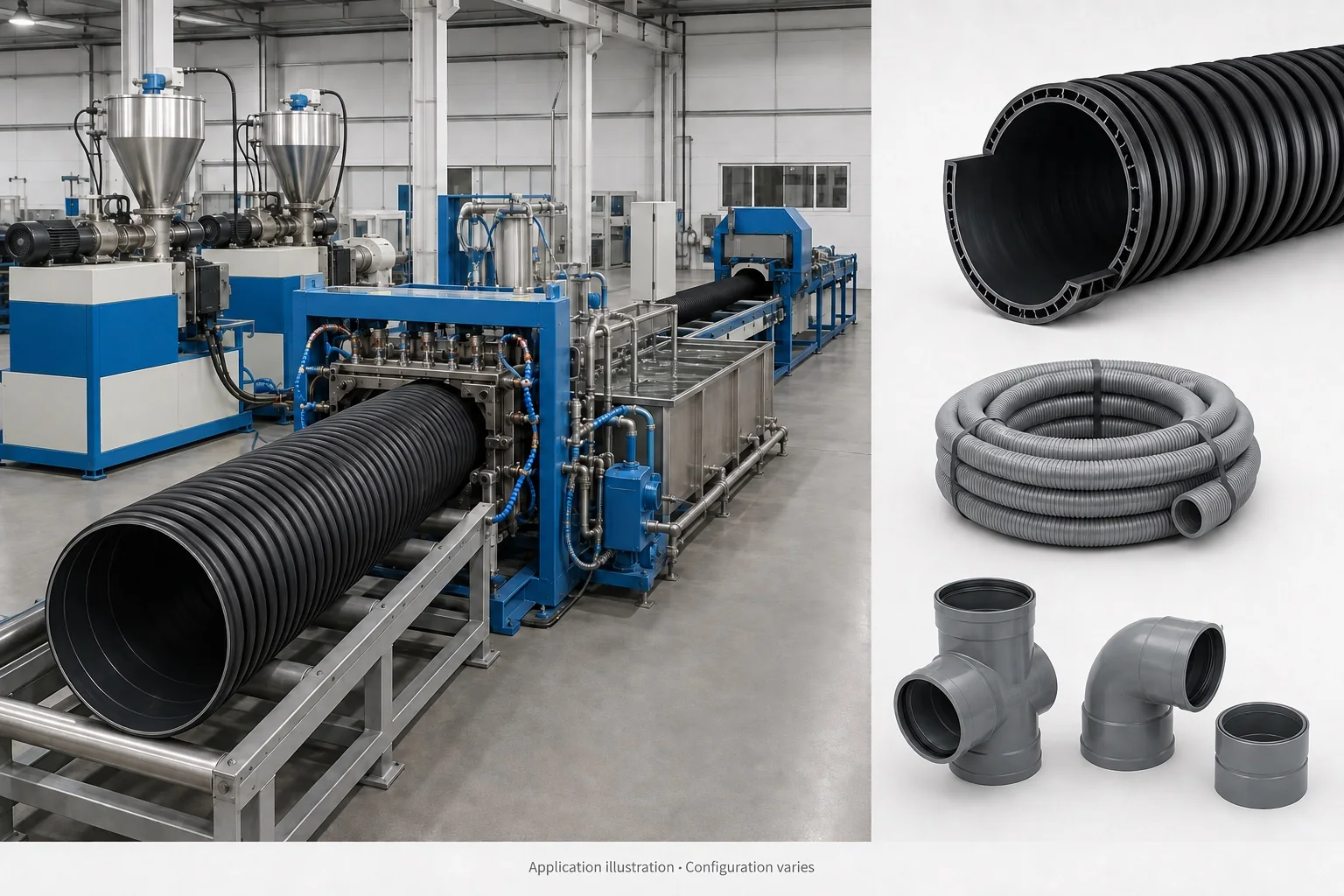
Define the resin, wall profile, diameter and stiffness range, joint design and handling.
Aluminum-Mould Double-Wall Corrugated Pipe Machine
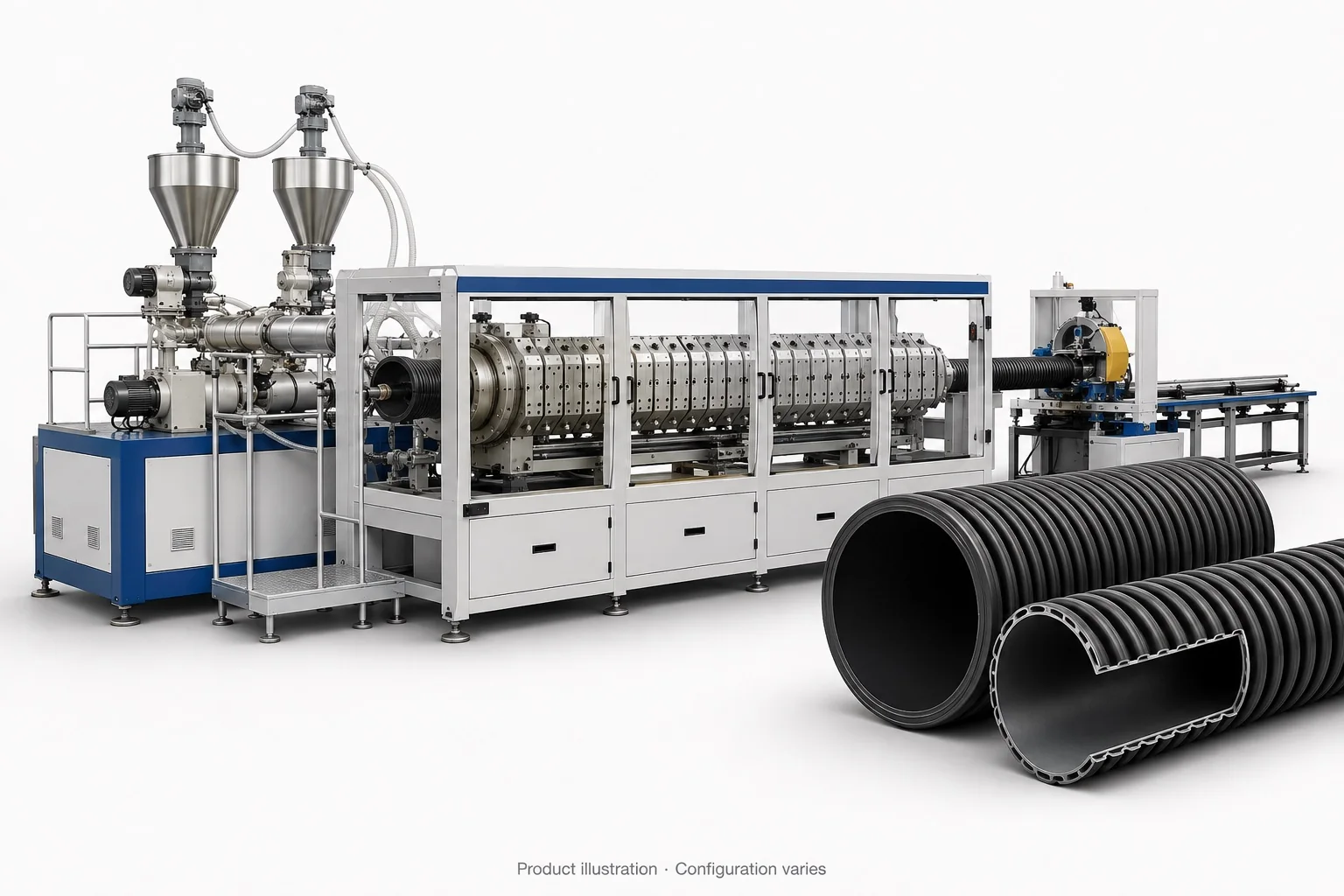
Evaluate mould construction with the pipe profile, cooling plan, change parts and acceptance checks.
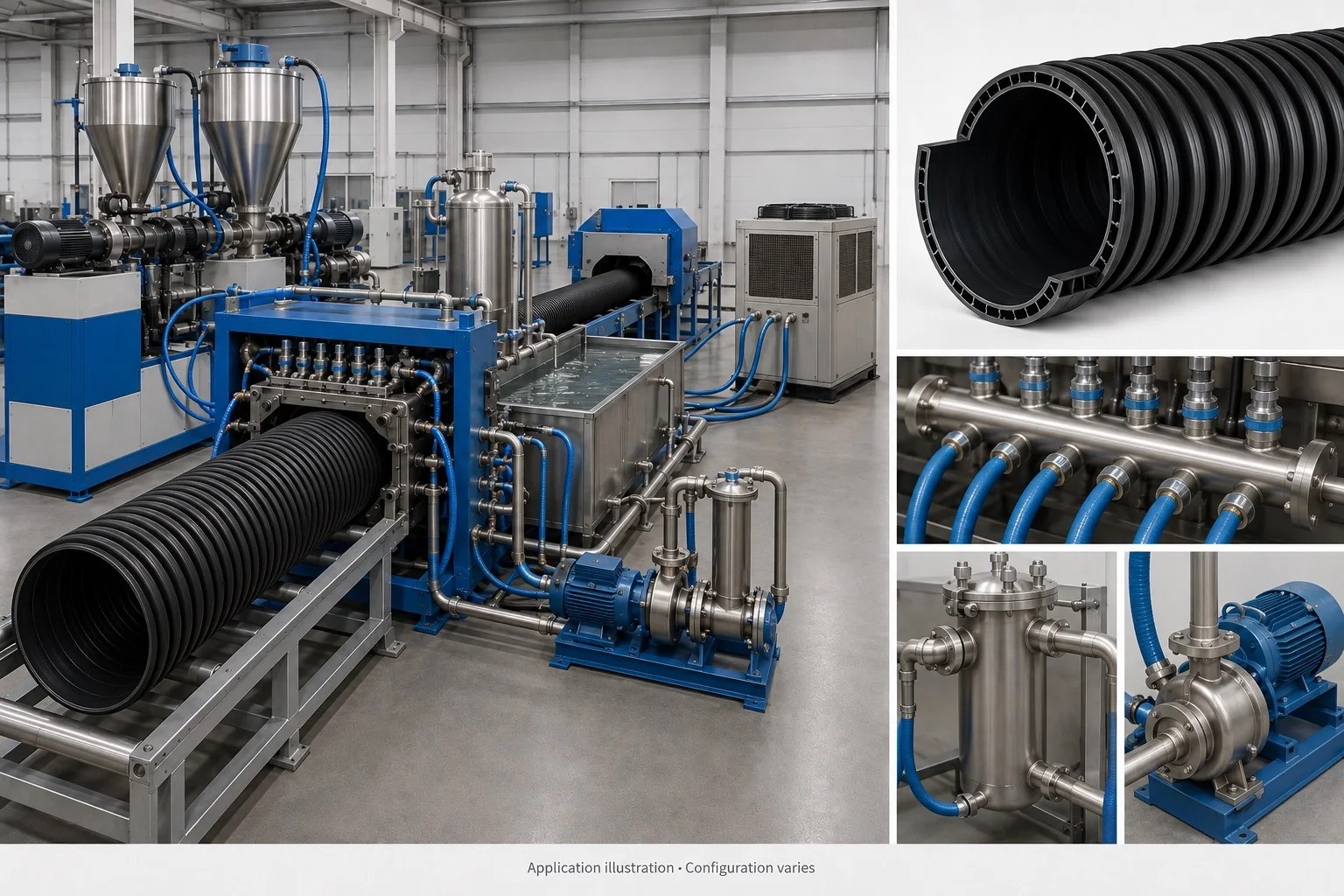
Water-Cooled Double-Wall Corrugated Pipe Line
Evaluate forming and cooling with the pipe specification, water conditions and factory utilities.
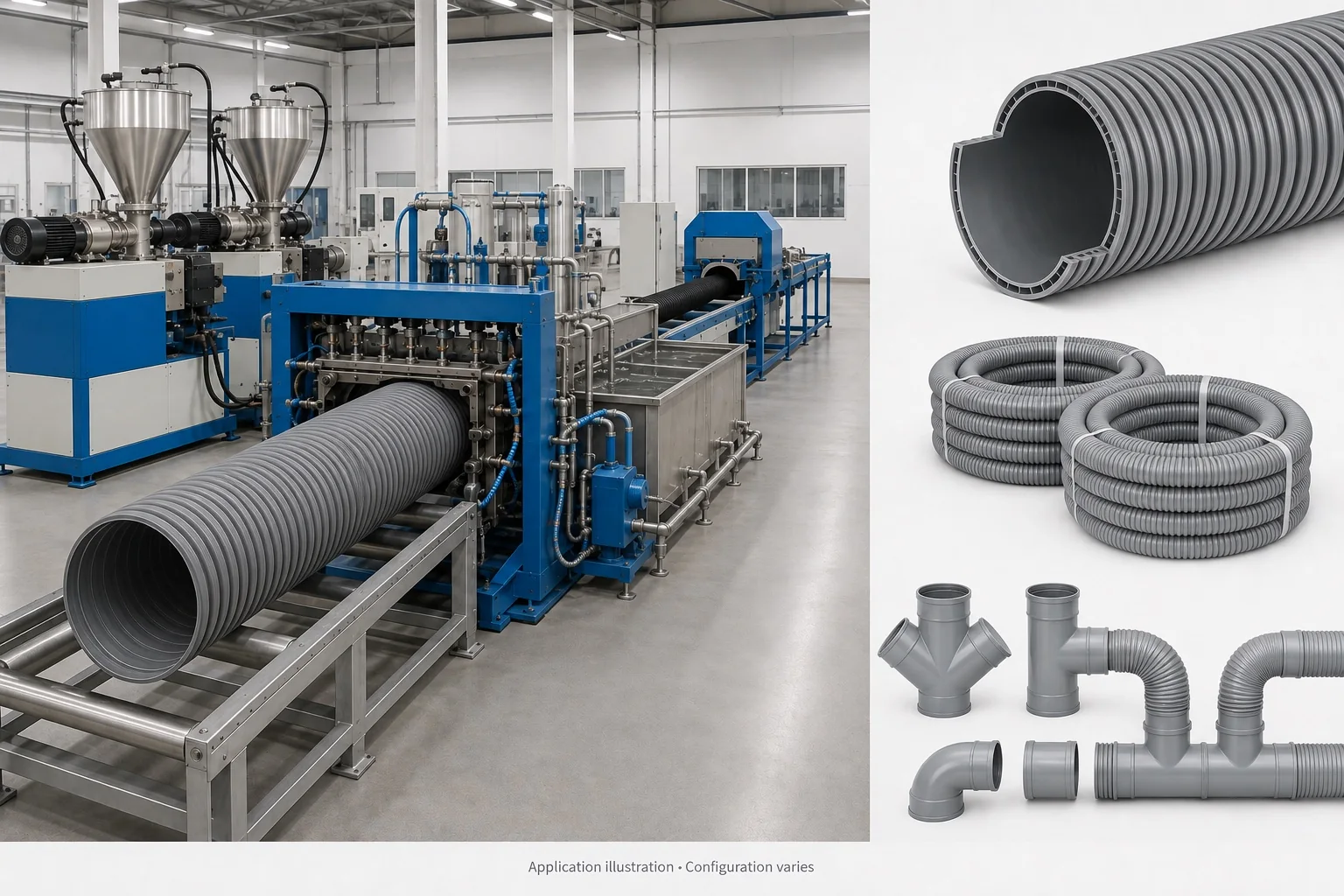
Fresh-Air Duct Corrugated Pipe Machine
Define ventilation duct material, wall profile, dimensions, fitting interface and package format.
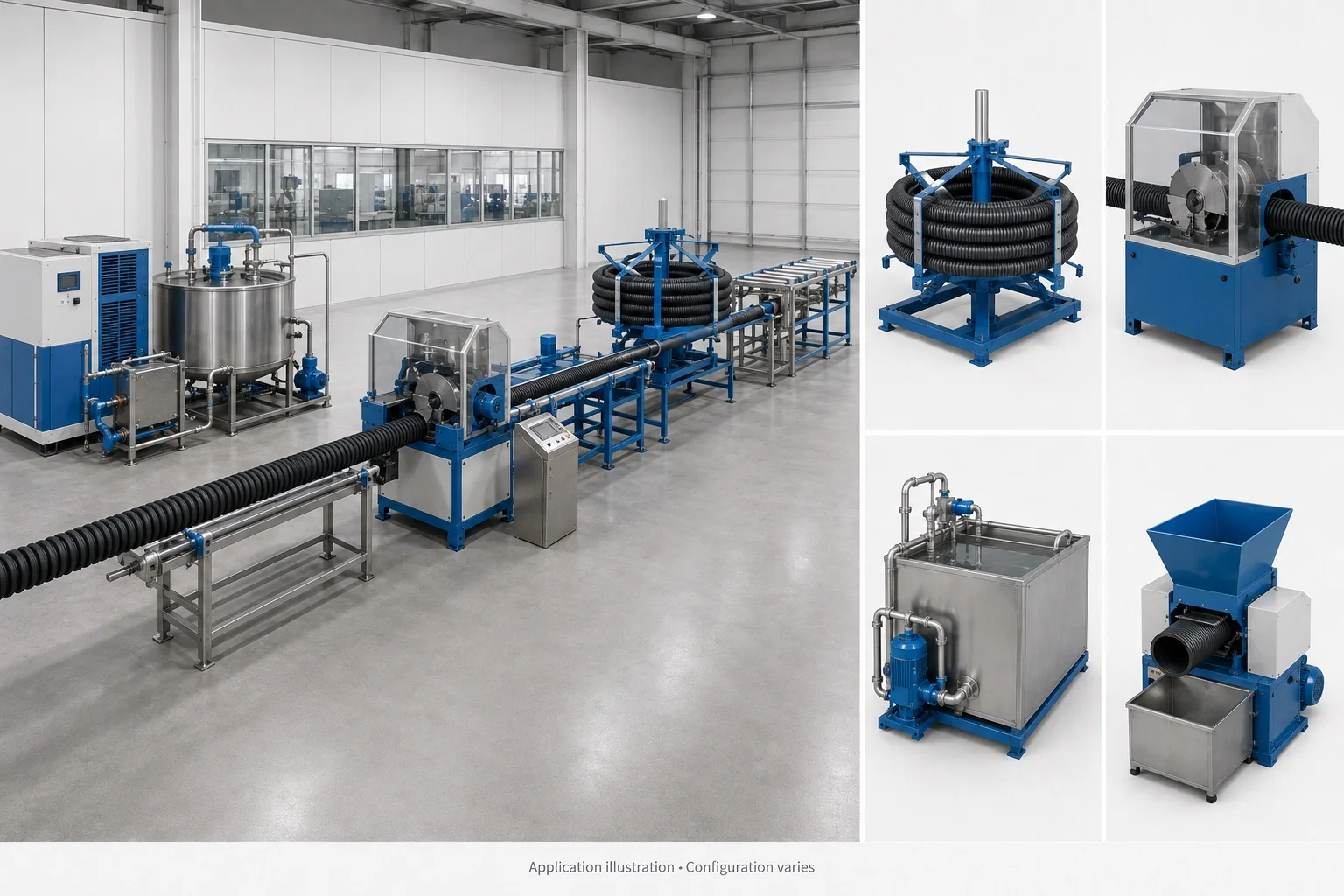
Corrugated Pipe Auxiliary Equipment
Separate required material handling, cooling, cutting, winding and scrap equipment.
All images are application illustrations. Final equipment scope and technical specifications are confirmed for each project.
Not sure which wall structure fits your product? Use the single-wall vs double-wall corrugated pipe machine guide to compare product inputs, downstream scope and factory requirements.
Start from the double-wall pipe standard or drawing
A double-wall corrugated pipe machine proposal should be tied to the finished structured-wall pipe. Send the applicable standard or a controlled drawing, the intended use and representative product information. Nominal diameter by itself does not define the inner wall, outer corrugation, stiffness requirement, joint design, perforation, straight length or inspection method.
| Decision area | Information to provide | What it helps define |
|---|---|---|
| Pipe structure | Cross-section, outside and inside dimensions, corrugation profile, wall structure and tolerance basis | Tooling, mould blocks, forming and dimensional inspection. |
| Material system | Polymer, grade or formulation information, colour, layer arrangement and recycled-content requirement | Feeding, extrusion, layer control, cooling and trial material. |
| Performance basis | Applicable standard, stiffness or structural requirement, joint test and other agreed product checks | The acceptance method and the conditions used to compare proposals. |
| Pipe ends and delivery | Cut length, socket or coupling design, sealing method, perforation, marking and stacking format | Cutting, end processing, inspection and handling scope. |
| Factory conditions | Output target with measurement basis, voltage, cooling-water data, compressed air, space, lifting and destination | Utilities, layout, downstream handling and the operating boundary. |
Compare complete line scope and acceptance evidence
A complete line may include material preparation, dosing, extrusion, tooling, corrugation forming, cooling, haul-off or controlled handling, cutting, socket or joint preparation, inspection, conveying and stacking. The required sequence varies with the pipe design. Ask suppliers to mark every included, optional and buyer-supplied item so the quotations describe the same production boundary.
- Match each extruder and forming function to the material and wall arrangement in the drawing.
- Review mould-block construction, change parts and the planned cooling method against the product range.
- Define output as an agreed product, material, time period and acceptable-product basis.
- List dimensions, wall quality, stiffness or structural checks, joint checks and handling results required during the trial.
- Confirm the factory layout, utility connection points, installation boundary, documents and spare-parts list before shipment.
Read the single-wall versus double-wall comparison if the product structure is not final. Use the quotation checklist to normalize supplier scope and the factory acceptance checklist to define the trial record.
Discuss a double-wall corrugated pipe project
Send Mac Lee the pipe standard or drawing, material, diameter and wall range, performance basis, joint or socket form, cut length, output basis, factory utilities and destination. RUNNING MACHINE will use those inputs to clarify the line scope before preparing a project-specific proposal.