
PLASTIC SHEET AND BOARD PRODUCTION
Define a sheet or board line by polymer, finished width, thickness range, surface requirement and downstream treatment.
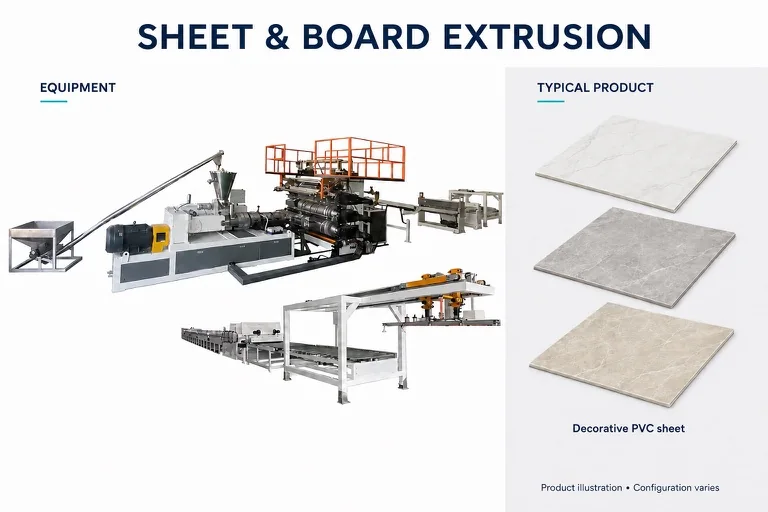
What this equipment is used for
Sheet and board extrusion equipment may be planned for solid plastic sheet, plated sheet, foam board and decorative sheet products. Different materials and structures require different feeding, extrusion, forming, cooling and finishing arrangements.
Typical equipment scope
- Material preparation and metering
- Extrusion and sheet or board die system
- Calendering, calibration or forming section as required
- Cooling, haul-off and edge-trimming equipment
- Cutting, stacking, laminating or surface-treatment units when agreed
The final line arrangement depends on the material, product drawing, required output and factory conditions. This page is a planning guide rather than a fixed technical specification.
What to confirm before quotation
- Polymer and formulation
- Finished width and thickness range
- Sheet or board structure and density requirement, if applicable
- Surface finish, color and later processing
- Target output and finished sheet dimensions
- Utilities, voltage and available line length
Choose a sheet or board application
Start with the finished material, dimensions, layer or board structure, surface and downstream process. Each page lists the information needed to define a project-specific equipment scope.
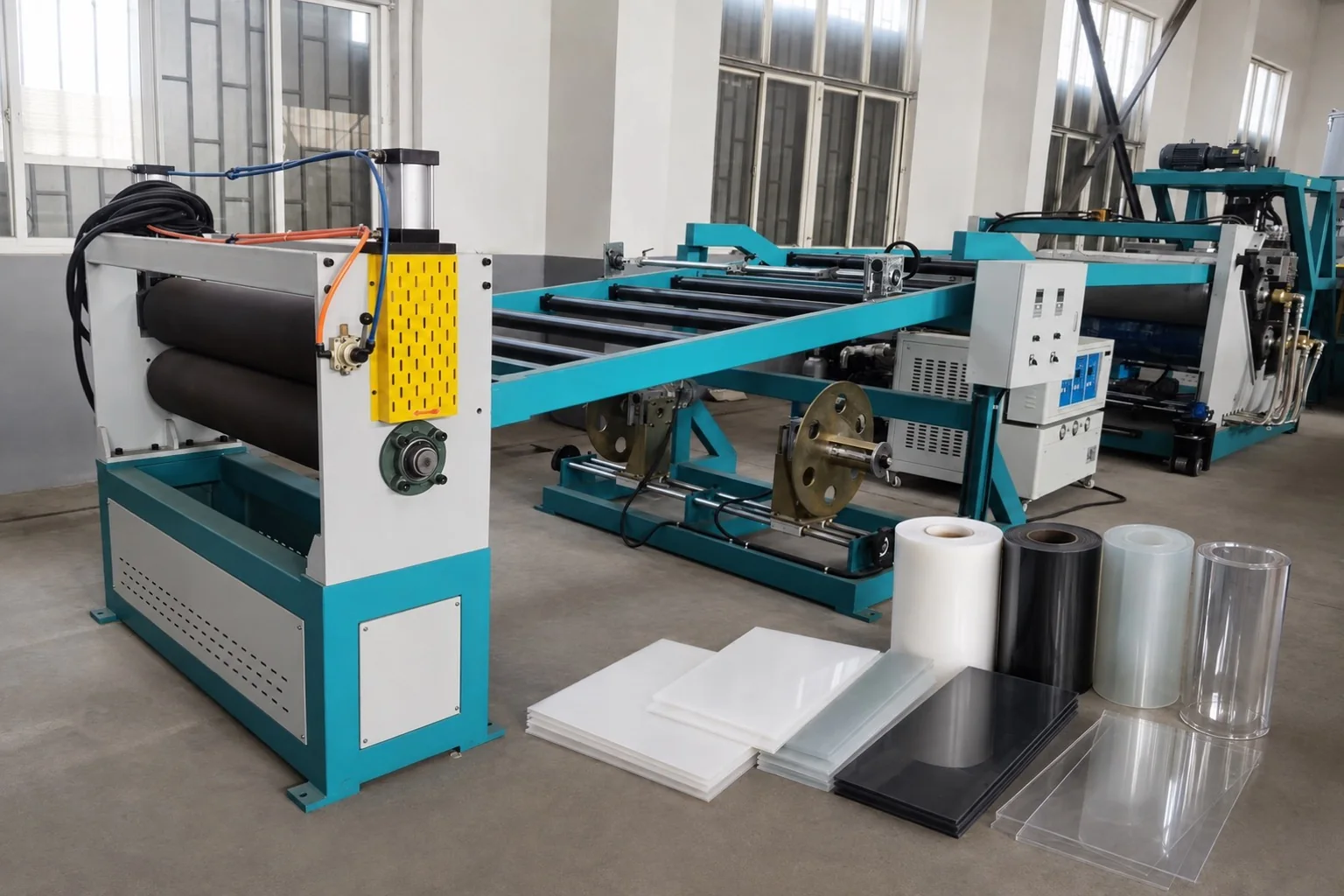
PP PE ABS PC PET Sheet Extrusion Line
Define the resin, layer structure, sheet dimensions, surface and winding or cutting format.
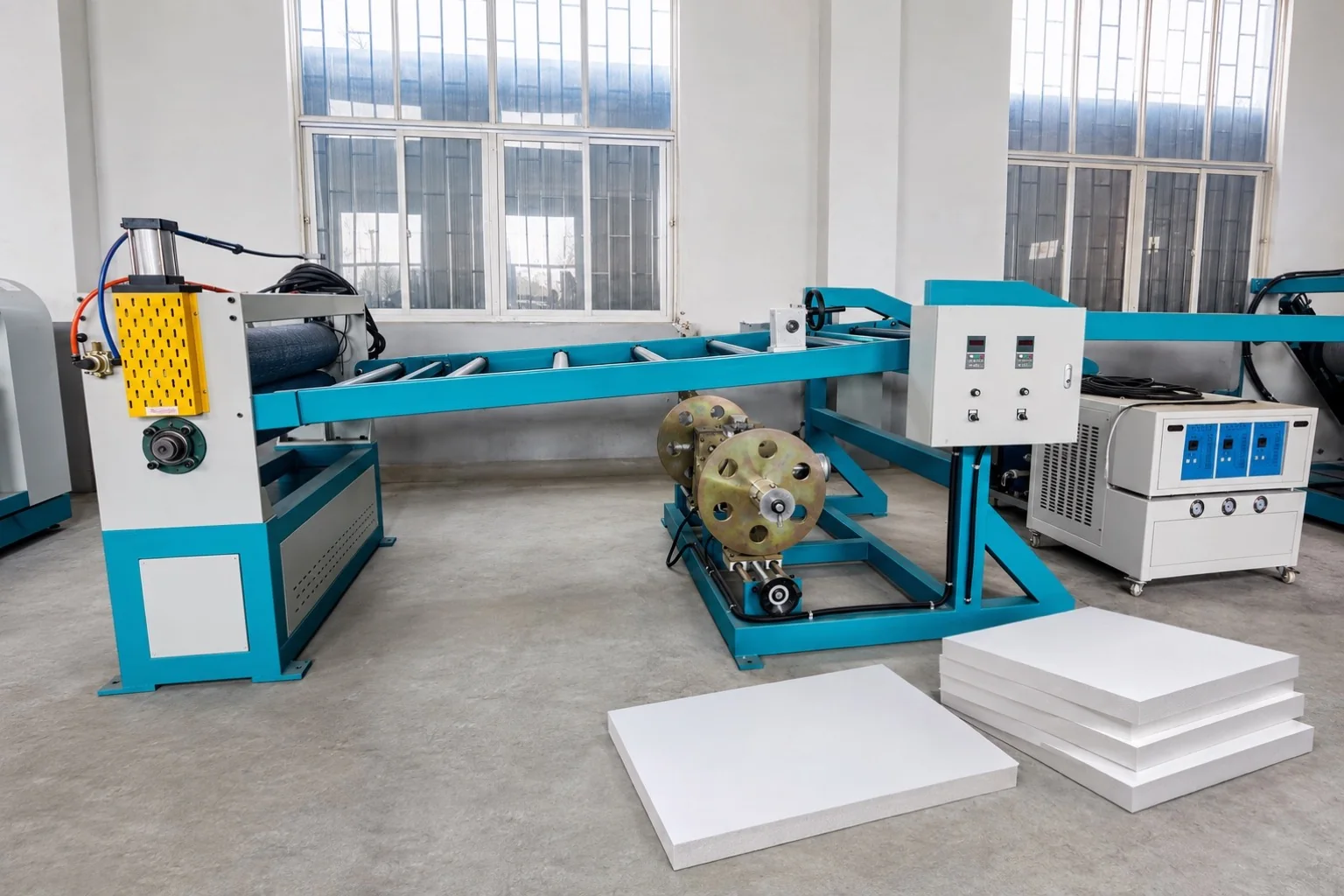
PVC Foam Board Extrusion Line
Plan PVC foam board from its formulation, structure, density, surface and later fabrication.
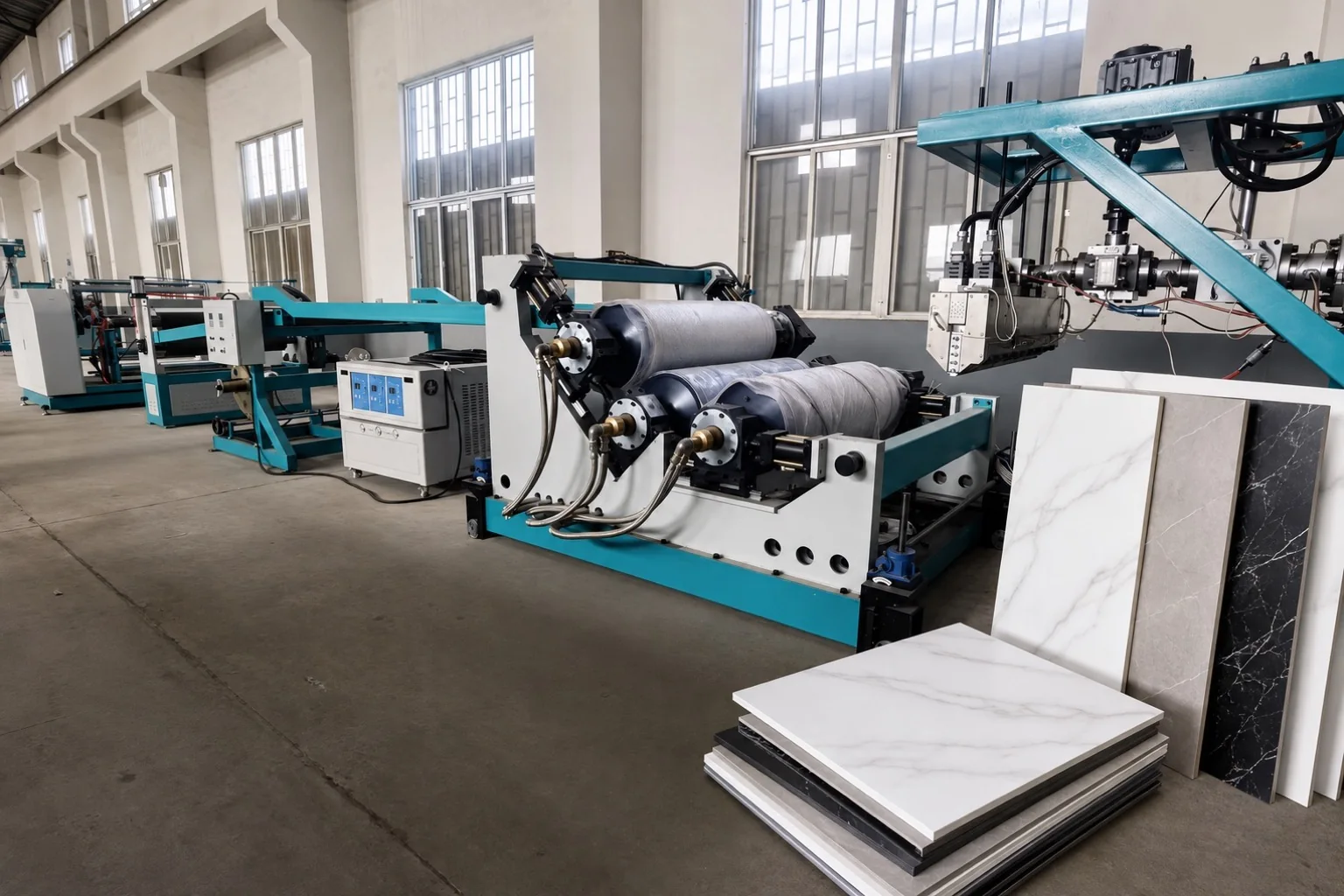
PVC Marble Sheet Production Line
Separate base-sheet extrusion from the selected decorative and finishing workflow.
Images combine edited equipment photographs with application examples. Final equipment scope and technical specifications are confirmed for each project.
Define the sheet or board construction before requesting a line
A sheet and board extrusion proposal starts with the finished product, not only the polymer name. Identify the resin or formulation, solid or foamed structure, number of layers, usable width, thickness range, surface requirement and final delivery format. If recycled material, filler, reinforcement or a decorative layer is planned, describe where it enters the structure and which product properties must be checked.
Separate extrusion from finishing and converting
- Product schedule: list priority combinations of material, layer structure, width and thickness.
- Surface: define gloss, texture, embossing, protective film or other visible-face requirements.
- Delivery format: state roll dimensions and winding needs, or sheet length, cutting, stacking and packing.
- Later processing: identify thermoforming, printing, lamination, trimming or fabrication and whether it belongs in the quotation.
- Acceptance basis: name the trial material and product, stable run period, dimensional checks, surface checks and output measurement.
Compare feeding, extrusion, tooling, forming or calibration, cooling, thickness control, edge handling, haul-off, winding or cutting and stacking as separate functions. Use the quotation checklist to align supplier scope and the factory planning guide to record utilities, floor space and material flow.
Prepare a sheet or board enquiry
Send Mac Lee the material, product structure, width and thickness range, surface, roll or cut format, output basis, voltage, workshop limits and destination. These inputs allow the equipment boundary to be reviewed before a project-specific proposal is prepared.