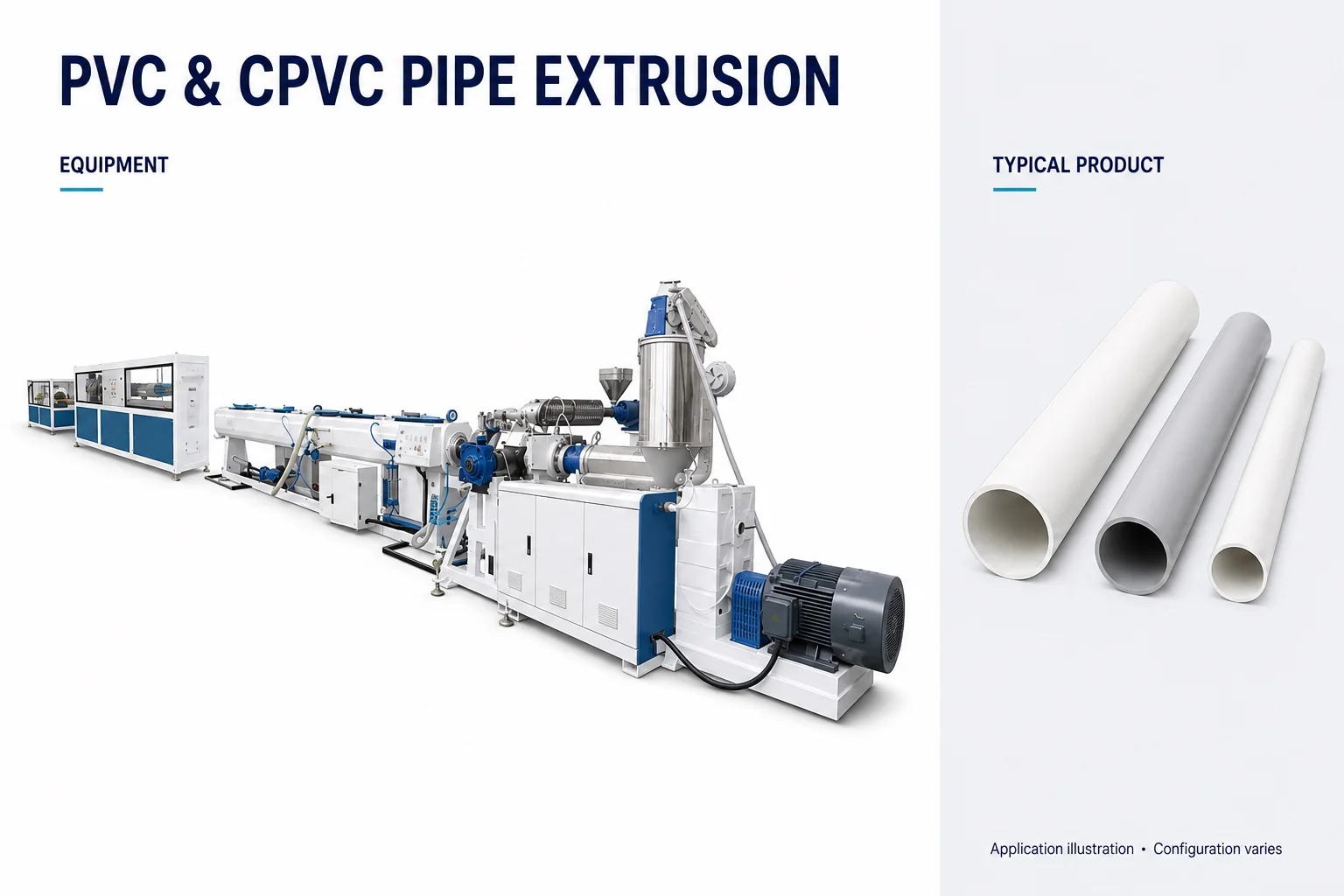
A PVC or CPVC pipe extrusion project starts with the finished pipe, not a standard machine list. RUNNING MACHINE helps buyers define the line around the pipe application, formulation, diameter range, wall structure, socket or joining method, output target and available factory utilities.
The equipment scope can be discussed for pressure pipe, drainage pipe, conduit and other suitable rigid-pipe applications. PVC and CPVC processing requirements are not identical, so the intended resin and formulation must be confirmed before selecting the extruder, tooling and downstream equipment.
Typical line scope
- Material mixing or feeding, when required
- Extruder and control system selected for the formulation
- Pipe die, sizing sleeve and related tooling
- Vacuum sizing and cooling sections
- Haul-off and cutting equipment
- Stacker, coiler or pipe handling according to the product
- Optional belling, socket-forming or auxiliary equipment
This list describes possible modules and is not a promise that every project requires all of them.
Information needed for an accurate proposal
- PVC or CPVC material and available formulation information
- Pipe application and applicable product standard, if any
- Minimum and maximum outside diameter
- Wall thickness or pressure class for each main size
- Single-layer or multi-layer construction
- Required socket, belling or other joining method
- Target output or preferred production speed
- Local voltage, frequency and phase
- Available factory space, cooling-water conditions and compressed air
- Equipment already available at the factory
Why these details matter
Diameter alone does not define an extrusion line. Wall thickness affects material throughput and cooling demand. Formulation influences screw, barrel and temperature-control decisions. Pipe length, socket type and packing method affect the downstream layout.
Frequently asked questions
Can one line produce both PVC and CPVC pipe?
That depends on the formulations, processing windows, product sizes and changeover expectations. Share both product specifications so the appropriate equipment and tooling scope can be evaluated.
Can socket or belling equipment be added?
It can be discussed when the pipe design requires it. State the pipe size range, socket standard and heating method in the inquiry.
Discuss your PVC or CPVC pipe project
For a project review, send the material or formulation information, finished-pipe drawing, dimensions, requested output and available power supply. Include any downstream operations you need us to assess. CPVC requirements should be identified separately for technical review.
View all plastic pipe extrusion lines · Quotation checklist · Pipe line selection guide
Define the PVC or CPVC pipe before comparing equipment
A useful PVC or CPVC pipe extrusion line proposal identifies the finished pipe and the formulation used for the review. State whether the project is for pressure pipe, drainage pipe, electrical conduit or another rigid-pipe application. Add the relevant drawing or standard, outside-diameter and wall range, layer structure, socket design and finished length. CPVC and PVC should be identified separately because the material and processing basis must be checked for the actual product.
Clarify preparation, extrusion and downstream responsibilities
Ask each supplier to show the production sequence from material preparation to finished-pipe handling. The proposal should state whether mixing, conveying or dosing is included; which dies, sizing sleeves and change parts are covered; how sizing and cooling are arranged; and whether marking, cutting, stacking or belling is included. Utilities, workshop work, installation support and buyer-supplied items should appear as separate boundaries.
- Formulation basis: provide the material type and available formulation information without assuming that one process setup covers every compound.
- Product range: list priority sizes with their wall or pressure basis instead of giving only the largest diameter.
- Joining method: provide the socket drawing, sealing method and belling requirement when socketed pipe is part of the project.
- Output basis: connect any requested output to a named material, pipe size, wall and stable measurement period.
- Acceptance evidence: agree which dimensions, appearance points, socket features and operating records will be checked during the trial.
Prepare a comparable PVC or CPVC pipe-line request
Use the quotation checklist to align the supply boundary and the factory acceptance checklist to define trial evidence.