
HOLLOW GRID AND CONSTRUCTION BOARD
Plan PP hollow board equipment around the internal flute structure, sheet width, thickness, weight and intended converting process.
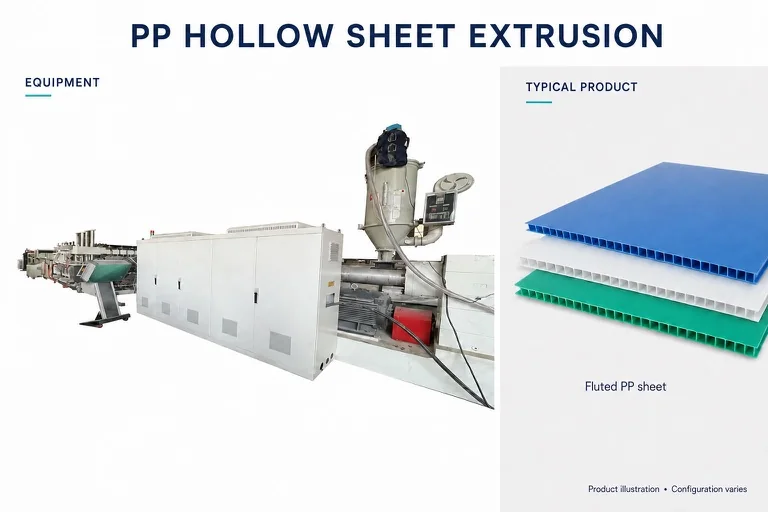
What this equipment is used for
PP hollow board machines are used to form lightweight hollow grid sheet or related hollow board structures. End uses can influence the board profile, surface treatment, cutting and handling equipment, so a sample or detailed drawing is useful.
Typical equipment scope
- PP material feeding and extrusion unit
- Hollow-board die matched to the requested structure
- Calibration and cooling section
- Haul-off, trimming and cutting equipment
- Corona treatment, stacking or other downstream units when required
The final line arrangement depends on the material, product drawing, required output and factory conditions. This page is a planning guide rather than a fixed technical specification.
What to confirm before quotation
- Board cross-section drawing or sample
- Finished width, thickness and sheet weight target
- Material, color and additive information
- Surface-treatment and printing requirements
- Target output and sheet length
- Electrical supply, cooling and factory space
Choose a PP hollow board application
Start with the finished board structure, dimensions, weight, surface and downstream process. Each page lists the information needed to define a project-specific equipment scope.
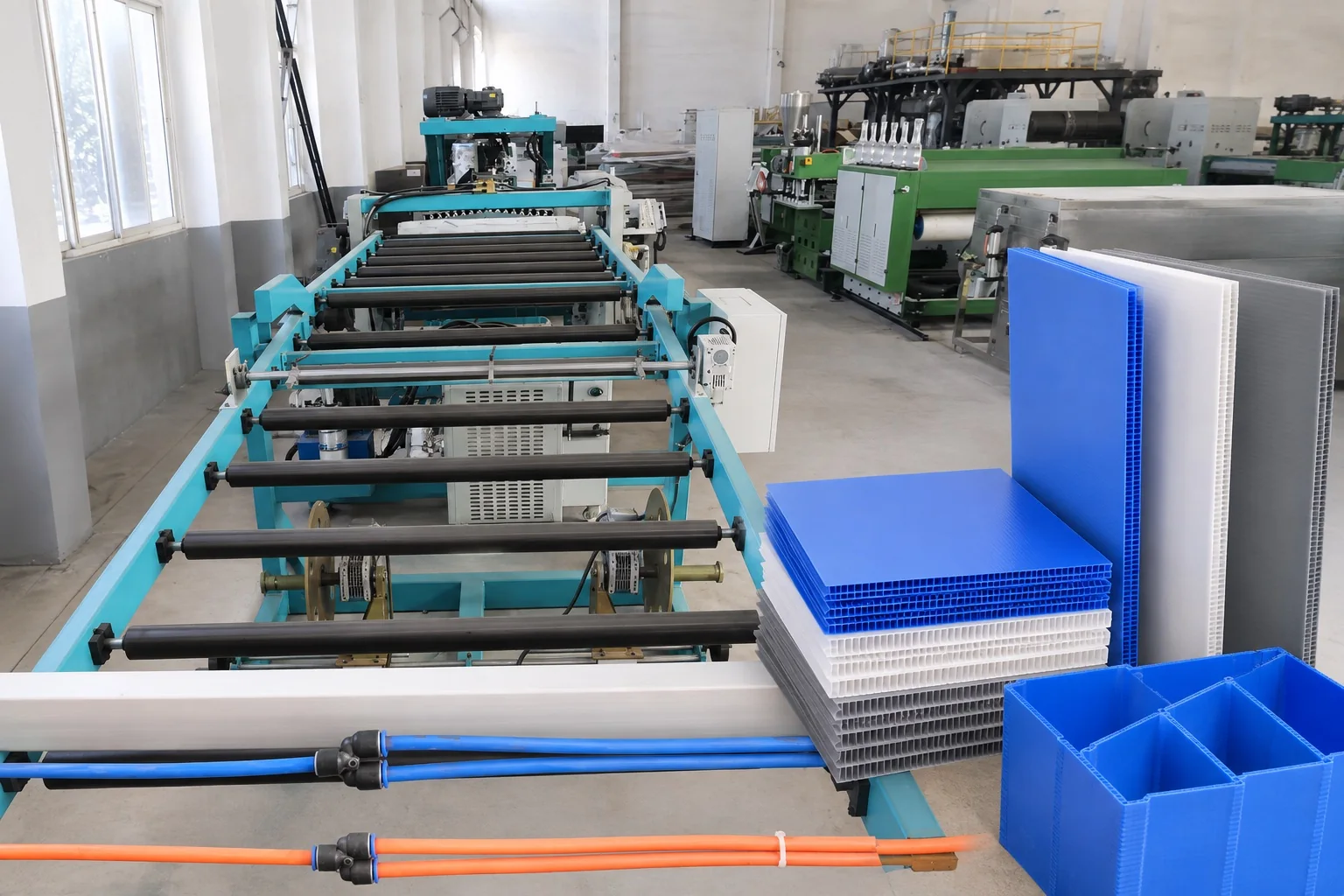
PP Hollow Grid Sheet Extrusion Line
Define the twin-wall flute structure, dimensions, weight, surface treatment and converting process.
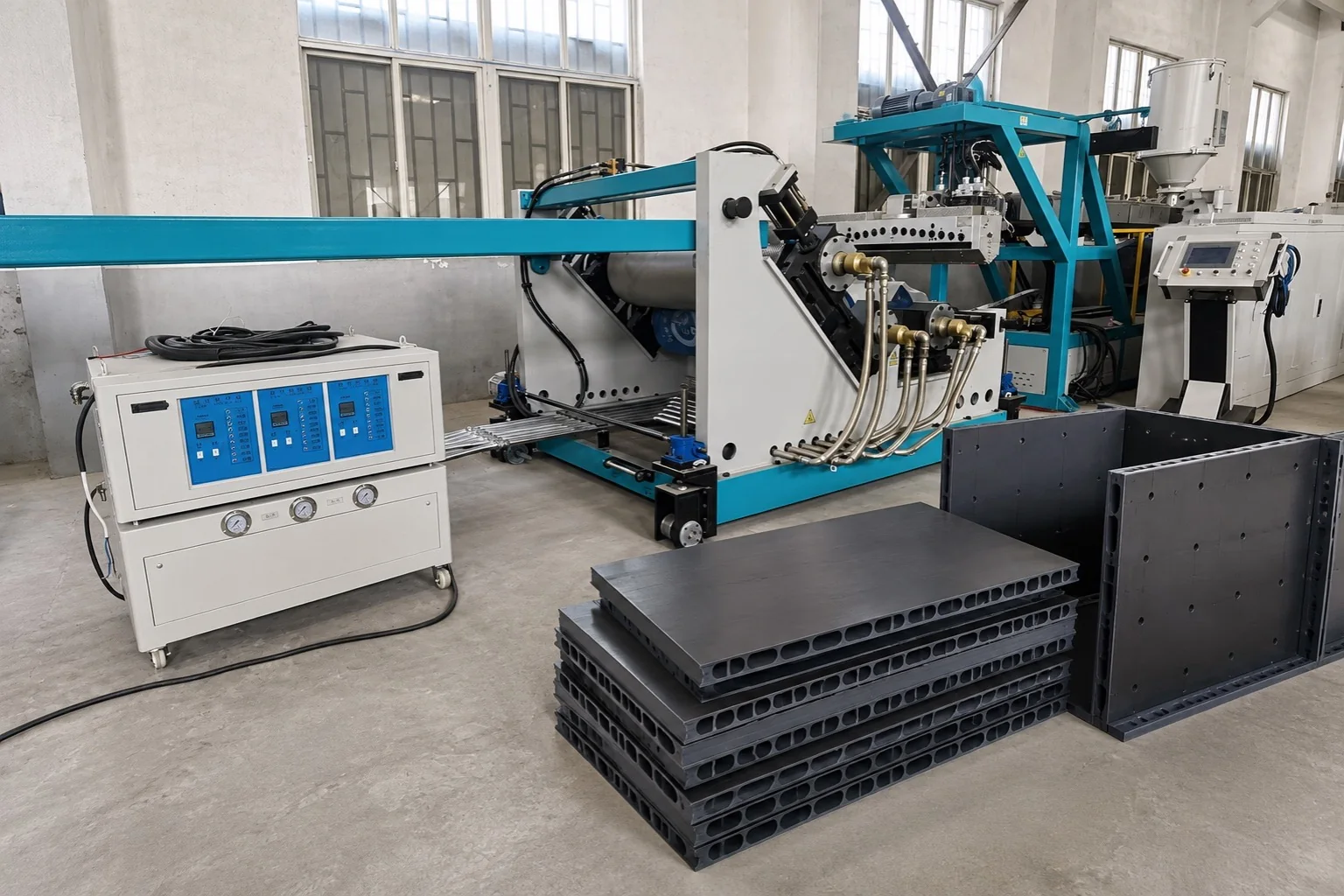
PP Hollow Construction Formwork Production Line
Plan thick PP hollow formwork around its internal structure, surface, edges and site workflow.
Images combine edited equipment photographs with application examples. Final equipment scope and technical specifications are confirmed for each project.
Specify the PP hollow board structure and end use
A PP hollow board machine should be discussed from the board cross-section and its application. Send a drawing or clear section image, overall width and thickness range, flute or rib arrangement, target weight basis and the required surface. State whether the board is intended for packaging, signs, protective sheets, reusable boxes, construction formwork or another use, because the inspection and converting needs differ.
Include downstream converting in the project boundary
- Material plan: identify the PP grade, colour, additives and any recycled-content requirement for review.
- Board range: list priority width, thickness, cross-section and weight combinations.
- Surface and treatment: describe printing, corona treatment, lamination or other surface preparation.
- Delivery: define sheet length, cutting tolerance, edge treatment, stacking and packing.
- Converting: list creasing, die cutting, welding, fastening or fabrication needed after extrusion and mark what must be included.
Ask each supplier to separate feeding, extrusion, die, calibration or forming, cooling, haul-off, trimming, cutting, treatment and stacking. Tie any output request to one named board construction, material and measurement period. Use the quotation checklist for a comparable scope and the factory acceptance checklist to define the trial record.
Send the PP hollow board project basis
Send Mac Lee the section drawing, material, application, width, thickness and weight range, surface treatment, cut and converting needs, output basis, utilities and destination. RUNNING MACHINE will use the information to clarify the proposed line scope.