MATERIAL PREPARATION AND DOWNSTREAM TASKS
Choose auxiliary machinery by the task it must perform before, during or after extrusion rather than by the final product alone.
What this equipment is used for
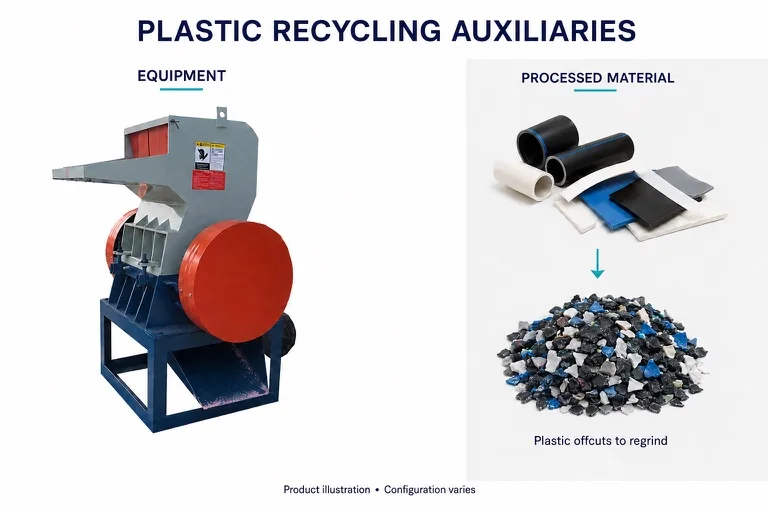
Plastic auxiliary machines support material preparation, size reduction, mixing, powder processing, cooling, pipe finishing and joining. A crusher, mixer, pulverizer, belling machine or welding unit has a different duty, so the machine must be selected around the actual material and process step.
Typical equipment scope
- Crushing or pulverizing equipment for stated feed material
- Hot and cold mixing systems for formulation preparation
- Cooling and material-conveying equipment
- Pipe belling, welding or finishing units
- Controls, safety features and accessories agreed for the task
The final line arrangement depends on the material, product drawing, required output and factory conditions. This page is a planning guide rather than a fixed technical specification.
What to confirm before quotation
- Required process task and where it sits in the line
- Material type, form and feed dimensions
- Desired discharge size or finished operation
- Target throughput or cycle requirement
- Upstream and downstream equipment details
- Power supply, dust, water and space conditions
Choose an auxiliary machine by task
Start with the actual pipe, compound, scrap or powder requirement. Each page lists the information needed to define a project-specific equipment scope.
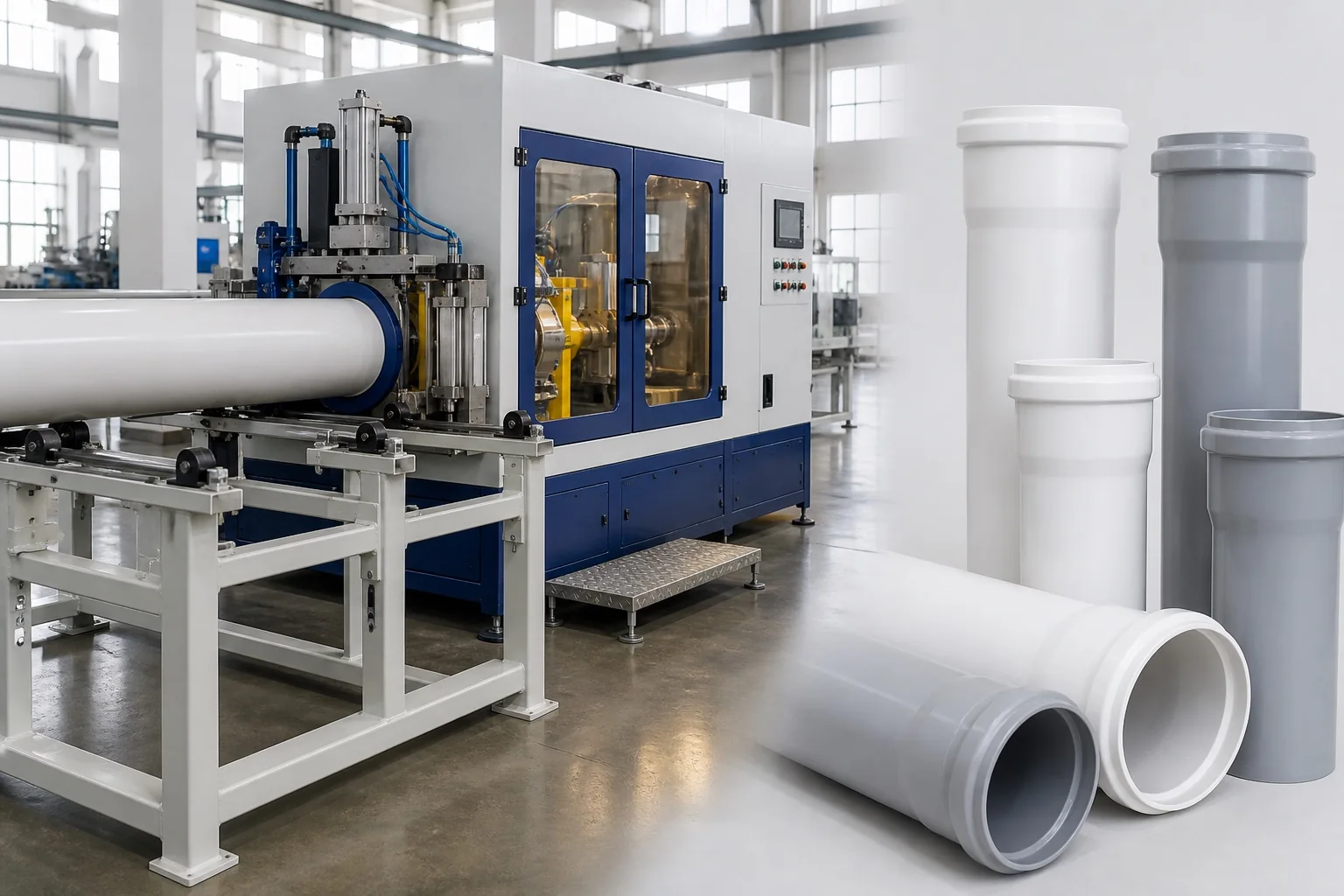
PVC Pipe Belling Machine
Define pipe dimensions, socket design, sealing method and online or offline handling.
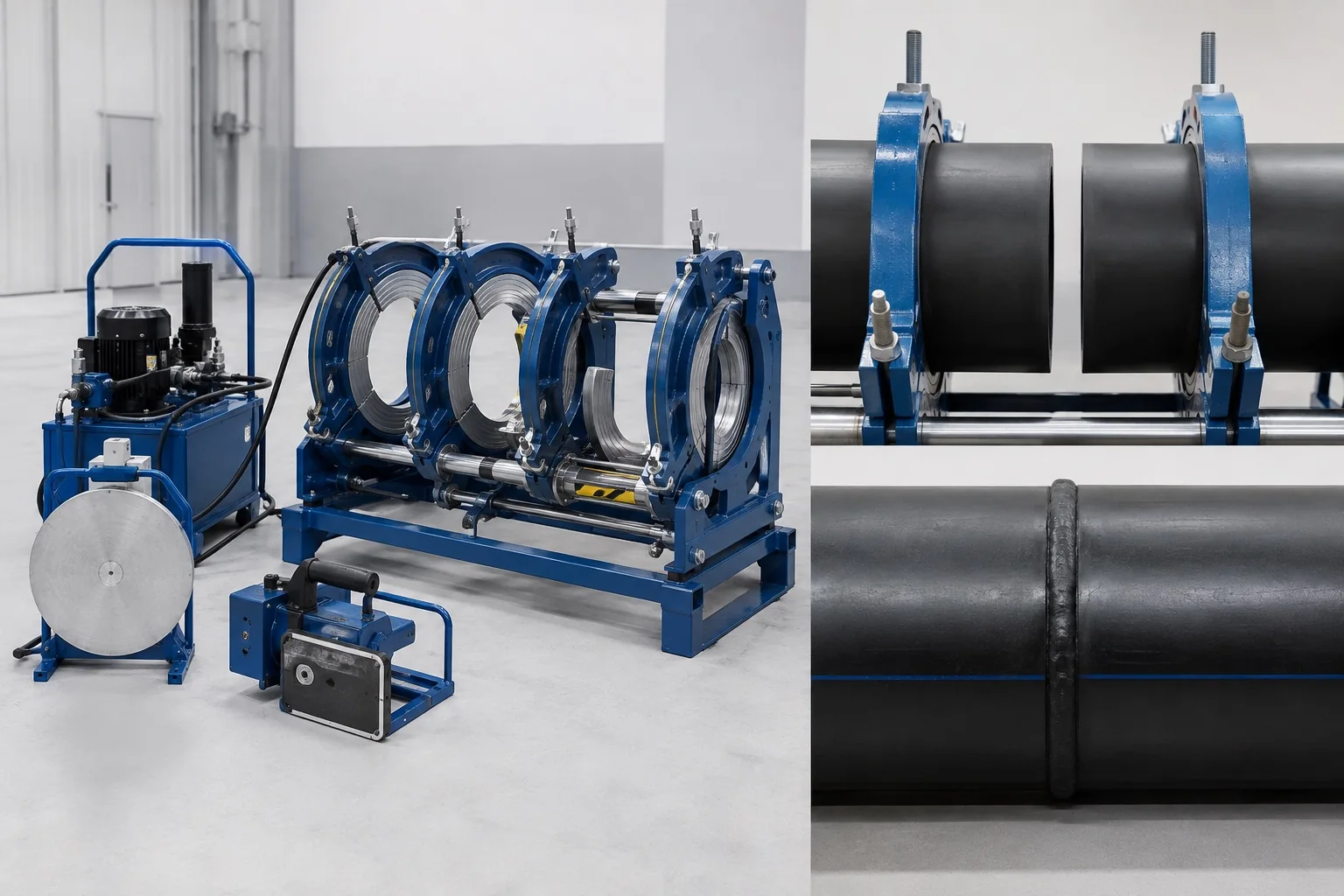
Plastic Pipe Welding Machine
Match the butt-fusion frame, tools and accessories to the pipe range and worksite.
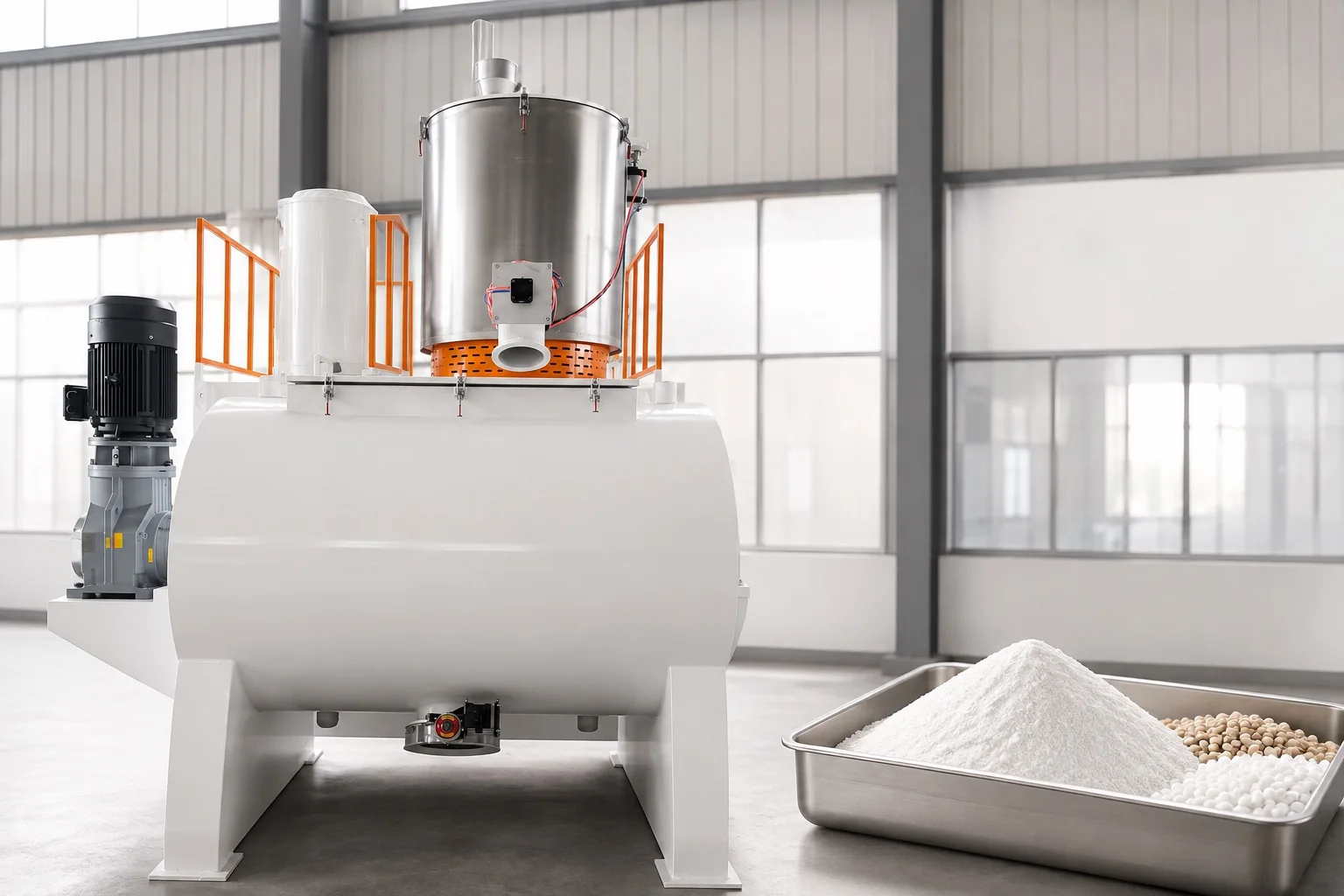
PVC Heating and Cooling Mixer
Plan batch mixing around formulation, temperatures, transfer and downstream process.
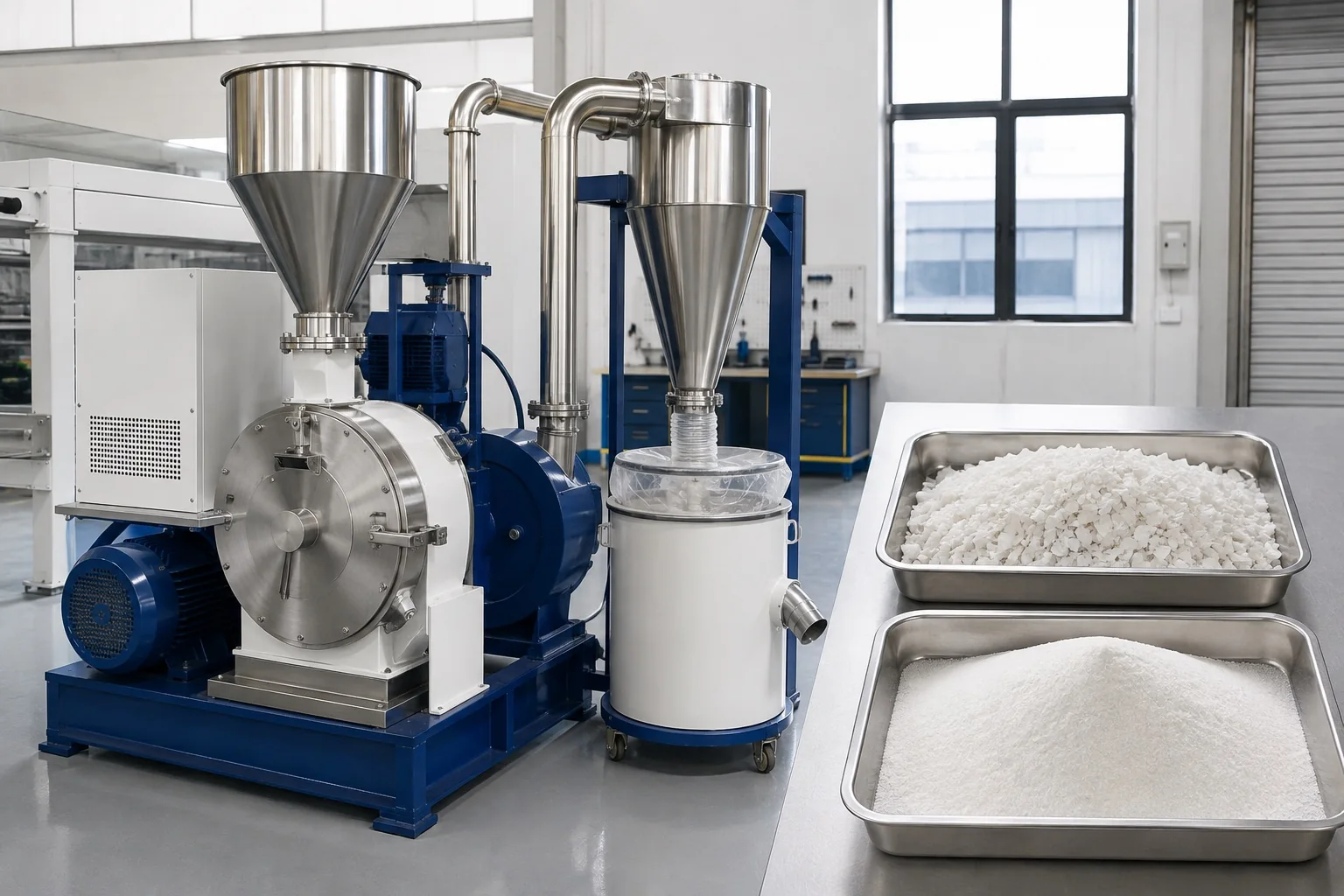
Plastic Pulverizer Machine
Define clean feed, powder range, cooling, classification and collection requirements.
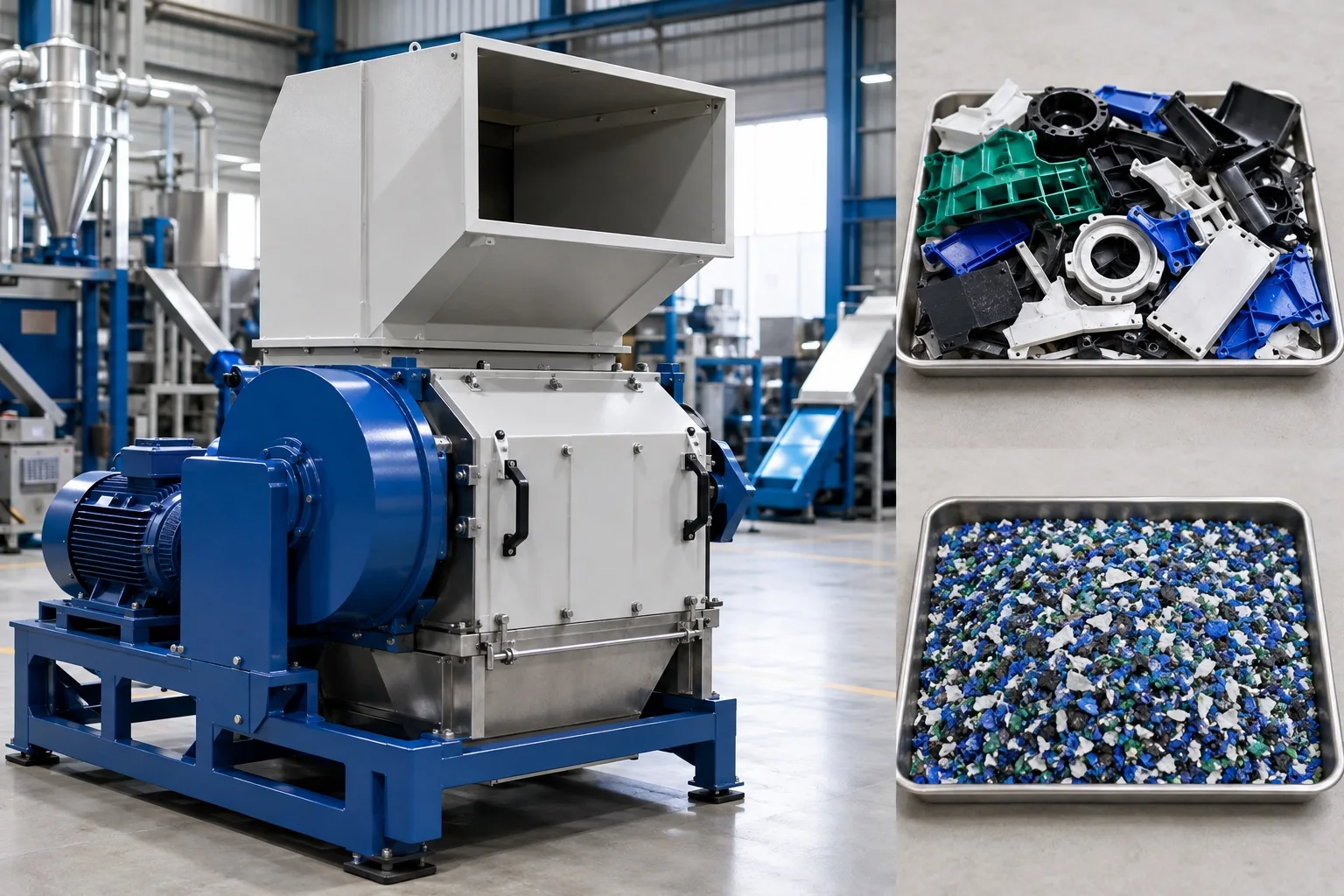
Plastic Crusher Machine
Match feeding, cutting and screening to the actual scrap and required regrind.
All images are application illustrations. Final equipment scope and technical specifications are confirmed for each project.
Select auxiliary equipment by its task and interfaces
A plastic auxiliary machine should be specified around the job it performs and the equipment connected before and after it. Start with the material or finished part, the required task and the operating sequence. A crusher, pulverizer, mixer, pipe belling machine or welding machine has a different definition of capacity, product quality and safe handling, so a single output number cannot be compared across these machines.
Provide the information needed for compatibility
- Input: identify the material or product, its dimensions, condition, temperature and representative samples or drawings.
- Required result: define particle form, blend condition, socket geometry, weld type or other measurable output.
- Line interface: provide upstream and downstream machine details, connection height, transfer method and control signals where relevant.
- Operating basis: state the batch or continuous cycle, priority product, required measurement method and expected shift pattern.
- Factory conditions: provide voltage, available utilities, installation space, dust or fume handling needs and destination.
Ask suppliers to list the main machine, feeding and discharge equipment, change parts, controls, guarding, collection equipment, documents and commissioning boundary separately. If an auxiliary machine must connect to an existing line, include nameplates, layout dimensions and photographs of the actual connection points. Review the quotation checklist and the factory planning guide before comparing offers.
Discuss an auxiliary machine application
Send Mac Lee the task, material or product, input and required result, capacity measurement basis, existing-line interfaces, utilities and destination. These details help define the correct equipment boundary before a proposal is prepared.