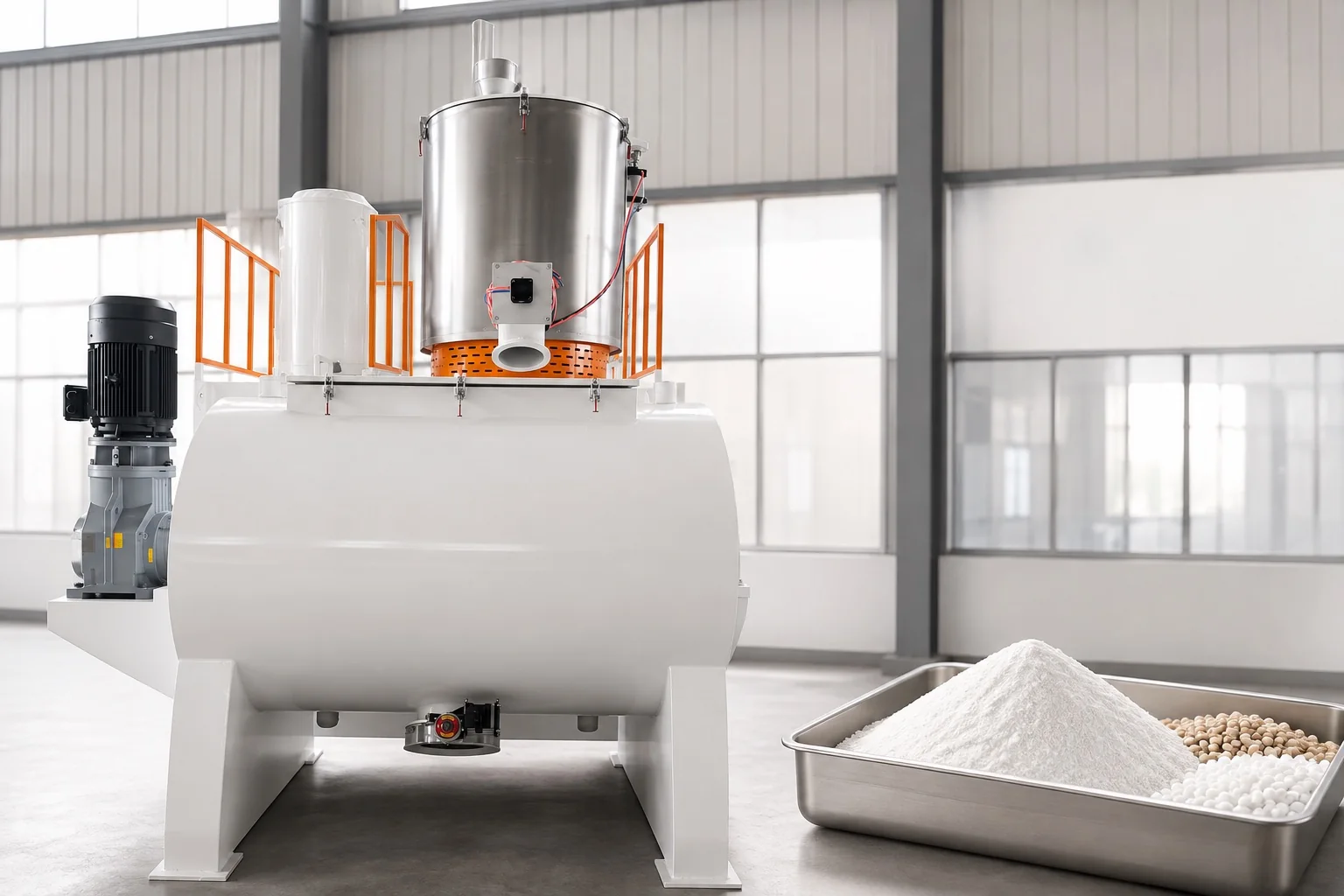
A PVC mixing system should be defined from the formulation and downstream process. Resin, stabilizer, filler, additive sequence, batch size and target discharge temperatures influence mixing, cooling, feeding and dust-control requirements.
Share the formulation by material role where confidential quantities cannot be released initially. Describe how ingredients arrive, how the blend is transferred and whether it feeds an extrusion or pelletizing process.
Typical equipment scope
- Ingredient feeding or manual charging interface
- Heating mixer with project-specific contact surfaces
- Cooling mixer and controlled discharge
- Temperature monitoring and control
- Dust collection connection and sealed transfer where required
- Buffer storage or downstream conveying equipment
- Access platform, guarding and cleaning provisions
The proposal should distinguish the core mixer, feeding, dust collection, conveying and electrical control scope.
Information needed for a proposal
- PVC type and formulation roles
- Powder, liquid and granular ingredient list
- Required batch size and batches per hour
- Addition sequence and critical process temperatures
- Required heating and cooling discharge temperatures
- Downstream extrusion or pelletizing process
- Feeding, weighing and transfer plan
- Dust-control and cleaning requirements
- Cooling water and power conditions
- Workshop height, access and floor layout
Frequently asked questions
Why are both heating and cooling stages used?
The required sequence depends on the formulation and downstream process. Define the accepted mixing method and discharge conditions before sizing the system.
Can automatic dosing be included?
List each ingredient, packaging form, dosing tolerance and batch sequence so suitable feeding and weighing options can be reviewed.
How should confidential formulations be handled?
Initial planning can start from material roles, approximate ranges and process temperatures. Final technical confirmation needs enough information to check material contact and process duties.
Related plastic auxiliary machines
PVC Pipe Belling Machine · Plastic Pipe Welding Machine · Plastic Pulverizer Machine
Discuss your PVC mixing system
Send Mac Lee the material roles, batch size, temperature sequence, downstream process, feeding plan, utilities and layout.
View Plastic Auxiliary Machines · Quotation checklist · Factory planning guide